
Introduction
Highway infrastructure plays a critical role in transportation, logistics, and economic growth. However, one of the biggest challenges faced by road authorities and transportation departments is vehicle overloading. Overloaded trucks not only damage roads and bridges but also increase maintenance costs, reduce highway lifespan, and create serious safety risks for drivers.
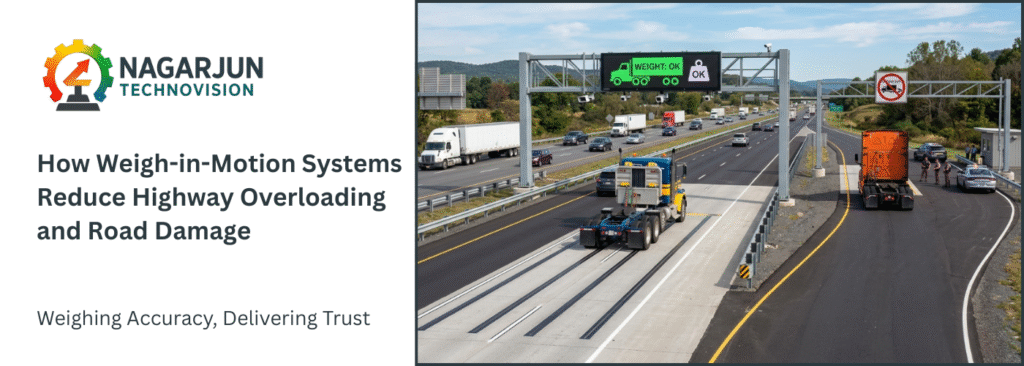
To address this issue, modern transportation systems are increasingly adopting Weigh-in-Motion (WIM) systems. These advanced weighing technologies help monitor vehicle weight while vehicles are moving, allowing authorities to detect overloaded trucks efficiently without disrupting traffic flow.
In this blog, we will explore how Weigh-in-Motion systems work, their benefits, and how they help reduce highway overloading and road damage.
What is a Weigh-in-Motion (WIM) System?
A Weigh-in-Motion system is an advanced vehicle weighing solution designed to measure the weight of vehicles while they are in motion. Unlike traditional static weighbridges, WIM systems do not require vehicles to stop for weight measurement.
These systems use sensors installed beneath or on the road surface to capture:
- Gross vehicle weight
- Axle load
- Vehicle speed
- Number of axles
- Vehicle classification
The collected data is processed in real time and can be integrated with traffic management systems, toll plazas, and enforcement systems.
The Problem of Highway Overloading
Overloaded vehicles are a major concern for transportation authorities worldwide. Trucks carrying loads beyond permissible limits place excessive stress on highways and bridges.
Major Problems Caused by Overloading
1. Road Surface Damage
Excessive axle loads cause cracks, potholes, rutting, and pavement deformation. Over time, highways deteriorate much faster than expected.
2. Bridge Structural Stress
Bridges are designed to handle specific load capacities. Continuous overloading weakens structural components and increases the risk of failure.
3. Increased Maintenance Costs
Governments spend huge amounts on road repairs and rehabilitation due to premature infrastructure damage caused by overloaded vehicles.
4. Traffic Safety Risks
Overloaded trucks have longer braking distances and reduced stability, increasing the likelihood of accidents.
5. Reduced Highway Lifespan
Repeated heavy loading significantly shortens the operational life of roads and highways.
How Weigh-in-Motion Systems Help Reduce Overloading
Real-Time Vehicle Weight Monitoring
WIM systems continuously monitor vehicle weights on highways without interrupting traffic movement. Authorities can instantly identify overloaded vehicles and take necessary action.
This real-time monitoring helps improve compliance with transportation regulations.
Early Detection of Overloaded Vehicles
Traditional weighing methods require vehicles to stop at checkpoints, which can lead to traffic congestion and reduced inspection efficiency.
WIM systems automatically detect overloaded trucks at highway speeds, allowing enforcement agencies to:
- Identify violators quickly
- Reduce manual inspections
- Improve operational efficiency
Better Enforcement of Weight Regulations
Weigh-in-Motion technology enables automated enforcement by integrating with:
- ANPR cameras
- Toll systems
- Traffic monitoring systems
- Centralized control software
When an overloaded vehicle is detected, authorities can:
- Generate automatic alerts
- Capture vehicle details
- Issue penalties
- Divert vehicles for inspection
This improves compliance and discourages repeated violations.
Reducing Road Damage Through Accurate Weight Control
Protecting Highway Infrastructure
Road pavements are designed for specific load capacities. Even a small increase in axle load can dramatically increase pavement wear.
By controlling overloaded vehicles, WIM systems help:
- Prevent pavement cracking
- Reduce pothole formation
- Minimize rutting
- Extend road lifespan
Reducing Bridge Deterioration
Bridge structures experience significant stress from overloaded vehicles. Continuous monitoring through WIM systems helps authorities:
- Track heavy vehicle movement
- Prevent excessive bridge loading
- Improve infrastructure safety
- Plan maintenance activities more effectively
Benefits of Weigh-in-Motion Systems
1. Improved Traffic Flow
Since vehicles do not need to stop for weighing, WIM systems reduce congestion and improve highway traffic efficiency.
2. Lower Maintenance Costs
By minimizing road damage caused by overloaded trucks, governments can significantly reduce highway repair and maintenance expenses.
3. Enhanced Road Safety
Proper weight enforcement reduces the risk of:
- Brake failures
- Tire blowouts
- Vehicle instability
- Highway accidents
This creates safer roads for all users.
4. Automated Data Collection
WIM systems provide accurate traffic and weight data that can be used for:
- Traffic analysis
- Infrastructure planning
- Toll management
- Transportation policy development
5. Increased Operational Efficiency
Automated vehicle weighing reduces manual intervention and allows authorities to monitor large volumes of traffic more efficiently.
Applications of Weigh-in-Motion Systems
Weigh-in-Motion technology is widely used in:
- Highways and expressways
- Toll plazas
- Logistics hubs
- Mining and construction industries
- Ports and industrial zones
- Smart transportation systems
These systems play an important role in modern traffic and infrastructure management.
Future of Weigh-in-Motion Technology
As transportation infrastructure becomes smarter, WIM systems are evolving with advanced technologies such as:
- Artificial Intelligence (AI)
- Internet of Things (IoT)
- Cloud-based monitoring
- Real-time analytics
- Automated enforcement systems
Future WIM solutions will provide even greater accuracy, automation, and integration with intelligent transportation systems.
Conclusion
Vehicle overloading remains one of the biggest causes of highway deterioration and road safety issues. Traditional weighing methods alone are no longer sufficient for modern transportation networks.
Weigh-in-Motion systems offer an efficient and reliable solution for monitoring vehicle weight, reducing road damage, improving traffic flow, and enhancing highway safety.
By implementing advanced WIM technology, transportation authorities and industries can protect infrastructure, reduce maintenance costs, and ensure better compliance with vehicle weight regulations.
As smart transportation systems continue to grow, Weigh-in-Motion technology will play a crucial role in building safer, more efficient, and more sustainable highways.
Frequently Asked Questions (FAQs)
1. What is a Weigh-in-Motion (WIM) system?
A Weigh-in-Motion (WIM) system is an advanced vehicle weighing technology that measures the weight of moving vehicles without requiring them to stop. It helps monitor axle loads, gross vehicle weight, and traffic data in real time.
2. How does a Weigh-in-Motion system work?
WIM systems use sensors installed on or beneath the road surface to detect vehicle weight while the vehicle is in motion. The system collects and processes data such as axle load, vehicle speed, and total weight automatically.
3. Why are Weigh-in-Motion systems important for highways?
WIM systems help prevent vehicle overloading, which is one of the major causes of road damage, bridge stress, and traffic accidents. They improve highway safety and reduce infrastructure maintenance costs.
4. What is the difference between a weighbridge and a Weigh-in-Motion system?
A traditional weighbridge requires vehicles to stop for weighing, while a Weigh-in-Motion system measures vehicle weight while the vehicle is moving. WIM systems are faster and more suitable for high-traffic highways and toll plazas.
5. Can Weigh-in-Motion systems detect overloaded trucks accurately?
Yes, modern WIM systems provide highly accurate weight measurements and can automatically identify overloaded vehicles in real time. Advanced systems can also integrate with cameras and enforcement software for automated monitoring.
6. Where are Weigh-in-Motion systems commonly used?
WIM systems are widely used on highways, toll plazas, logistics hubs, mining areas, industrial zones, ports, and smart transportation projects for vehicle weight monitoring and traffic management.
7. What are the benefits of installing a Weigh-in-Motion system?
Some major benefits include:
- Reduced road and bridge damage
- Improved traffic flow
- Lower maintenance costs
- Better overload enforcement
- Enhanced highway safety
- Automated data collection and monitoring