
Slow Speed Weigh in Motion (SSWIM) System
Accurate Vehicle Weighing Without Stopping
A Slow Speed Weigh in Motion (SSWIM) system is a vehicle weighing solution that measures weight while vehicles move slowly over a platform, typically at 5–15 km/h. Unlike traditional systems, vehicles do not need to stop completely. As a result, traffic flow improves and operational efficiency increases.
What is a Slow Speed Weigh-in-Motion System?
Slow Speed Weigh-in-Motion (SSWIM) is a modern weighing system that captures axle and gross vehicle weight at low speeds. Typically, vehicles pass over sensors at controlled speeds without stopping.
As a result, delays are reduced significantly. In addition, efficiency improves across operations. Moreover, manual intervention is minimized. Therefore, the system is widely used in logistics, industries, and transport hubs.
How Does SSWIM Work?
A Slow Speed Weigh-in-Motion (SSWIM) System uses advanced weighing sensors embedded within the roadway to accurately measure vehicle weight while vehicles continue moving at controlled low speeds. Unlike traditional static weighbridges, vehicles do not need to stop completely for weighing. As a result, traffic flow remains smooth while accurate weight data is collected in real time.
Vehicle Detection
As a vehicle enters the weighing zone, vehicle separator sensors immediately detect its presence and activate the weighing process. This ensures that every vehicle is accurately identified before weight measurements begin. Furthermore, the system can distinguish between different vehicle types based on axle configuration and movement patterns.
Axle Weight Measurement
Once the vehicle moves over the weighing platform, high-precision load cells and sensors capture individual axle loads and gross vehicle weight. Because the vehicle continues moving at a controlled speed, the system can obtain highly accurate measurements without disrupting operations. In addition, the sensors continuously monitor the vehicle’s movement to ensure reliable data collection.
Data Transmission and Processing
After the weight data is collected, the sensors transmit signals instantly to the controller and weight indicator. Subsequently, the controller processes the information and calculates axle weights, gross vehicle weight, axle count, and vehicle classification. Moreover, advanced software algorithms help improve accuracy and reduce the possibility of measurement errors.
Data Storage and Reporting
Once processing is complete, the system displays the results in real time on the monitoring interface. Additionally, all weighing data is securely stored for future analysis, reporting, and compliance verification. Therefore, operators can easily access historical records whenever required.
Real-Time Monitoring and Enforcement
The SSWIM system continuously monitors vehicle traffic and identifies overloaded vehicles automatically. As a result, authorities and facility operators can take immediate action to prevent road damage, improve safety, and ensure regulatory compliance. Furthermore, the system supports integration with traffic management platforms, surveillance systems, and enforcement applications.
Overall, a Slow Speed Weigh-in-Motion System provides accurate vehicle weighing, overload detection, axle load monitoring, and traffic analysis without interrupting vehicle movement. Consequently, it is widely used at toll plazas, logistics hubs, ports, industrial facilities, mining operations, and transportation corridors.
Components of a Slow Speed Weigh-in-Motion System
A Slow Speed Weigh-in-Motion (SSWIM) system consists of several integrated components that work together to provide highly accurate vehicle weight measurement, axle load analysis, and traffic monitoring.
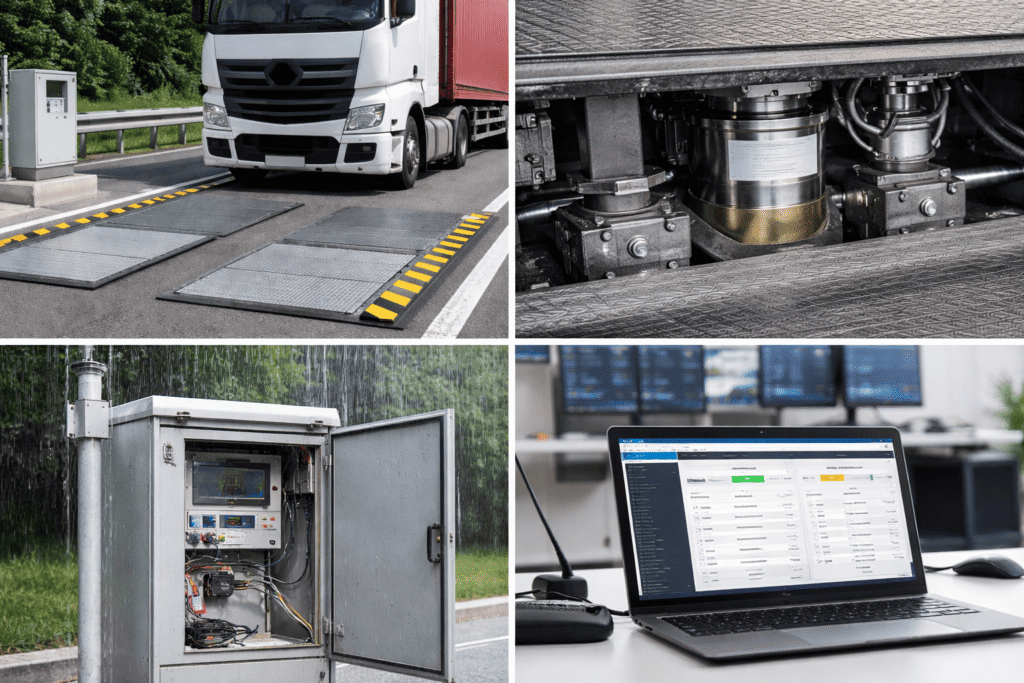
Slow Speed Weigh-in-Motion Load Cell
Load cells are responsible for capturing axle and gross vehicle weight data with exceptional accuracy. Our Slow Speed Weigh In Motion Load Cells are designed for long-term reliability and stable performance in toll plazas, logistics hubs, ports, and industrial facilities.
Slow Speed Weigh-in-Motion Indicator
The indicator processes signals from the weighing sensors and converts them into accurate weight information. Our Slow Speed Weigh In Motion Indicators provide real-time monitoring, reporting, and seamless software integration.
Slow Speed Weigh-in-Motion Junction Box
The junction box serves as the communication interface between load cells and indicators. Our robust Slow Speed Weigh In Motion Junction Boxes ensure reliable signal transmission and long-term durability in outdoor environments.
Vehicle Separator Sensor
Vehicle separator sensors accurately detect vehicle entry and exit points, helping improve axle counting accuracy and vehicle classification. These sensors are essential for achieving reliable dynamic weighing results.
Why Slow Speed Weigh-in-Motion Systems Deliver Higher Accuracy
Unlike medium-speed weighing systems, Slow Speed Weigh-in-Motion systems operate at controlled vehicle speeds, allowing more detailed weight capture and analysis. This results in improved axle load accuracy, better vehicle classification, and enhanced overload detection capabilities.
Because vehicles travel at lower speeds, the system can provide more reliable data for enforcement applications, tolling operations, industrial facilities, and logistics management. SSWIM technology is widely used where precise weight measurement is critical for operational efficiency and regulatory compliance.
Key Benefits & Features
Improved Traffic Flow: Vehicles move continuously at 5–15 km/h without stopping, significantly reducing congestion.
High Accuracy: The system delivers reliable results (±1% to ±2% accuracy), ensuring strict compliance with weight regulations.
Operational Efficiency: Faster vehicle processing minimizes delays and requires less manual intervention.
Cost Effective: Reduced manpower and low maintenance requirements lead to lower overall operational costs.
Enhanced Road Safety: Easily identify overloaded vehicles to protect infrastructure and improve safety.
Technical Performance Standards
| Parameter | Specification |
|---|---|
| Speed Range | 5 – 15 km/h |
| Weighing Capacity | Up to 100 Tons |
| Accuracy | ±1% to ±2% |
| Platform Type | Steel / RCC |
| Platform Length | 6m – 18m |
| Load Cells | Digital / Analog |
| Axle Detection | High-precision sensors |
| Display System | Digital Indicator / Software |
| Integration | ERP / RFID / CCTV |
| Power Supply | 220V AC |
| Temperature | -10°C to 60°C |
SSWIM vs Static Weighbridge
| Feature | SSWIM | Static Weighbridge |
|---|---|---|
| Vehicle Movement | Slow moving | Fully stopped |
| Speed | 5–15 km/h | 0 km/h |
| Efficiency | High | Moderate |
| Traffic Flow | Smooth | Can cause congestion |
| Automation | High | Medium |
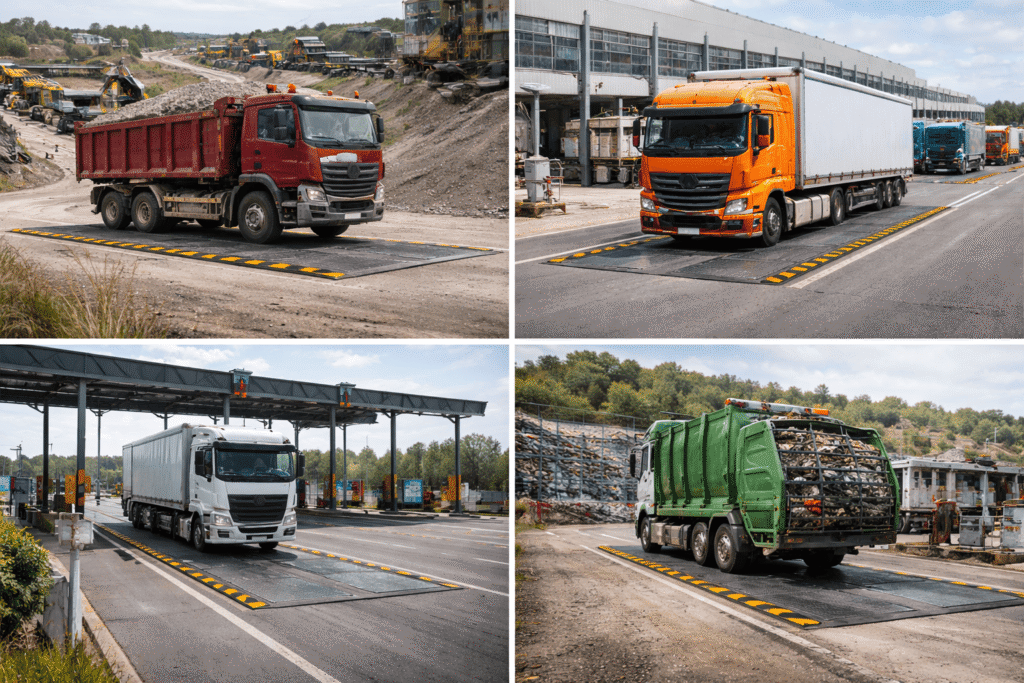
Applications of Slow Speed Weigh-in-Motion Systems
- Highway toll plazas
- Overload enforcement stations
- Logistics and freight terminals
- Industrial manufacturing facilities
- Mining and quarry operations
- Ports and cargo terminals
- Smart transportation infrastructure
- Multi-Lane Free Flow (MLFF) tolling projects
- Warehouse and distribution centers
Why Partner With Us for SSWIM?
Leading Slow Speed Weigh In Motion System manufacturer and supplier
Advanced vehicle weighing and overload detection technology
High-accuracy load cells and indicators
Reliable junction boxes and vehicle separator sensors
Custom software integration and reporting solutions
Nationwide installation and technical support
Frequently Asked Questions
Q1. What is Low Speed Weigh in Motion (LSWIM)?
Slow Speed Weigh in Motion (SSWIM) is a vehicle weighing system that measures axle and total weight whil vehicles move slowly over sensors. Unlike static weighbridges, it does not require vehicles to stop. As a result, it improves traffic flow and operational efficiency.
Q2. How accurate is a Slow Speed Weigh-in-Motion System?
Slow Speed Weigh-in-Motion systems generally provide higher accuracy than medium-speed systems because vehicles travel at controlled speeds during measurement. Actual accuracy depends on installation, calibration, and site conditions.
Q3. Where are SSWIM systems commonly used?
They are widely used at toll plazas, enforcement stations, logistics hubs, industrial facilities, mining sites, ports, and transportation corridors.
Q4. Does SSWIM require vehicles to stop?
No. Vehicles continue moving at slow controlled speeds while the system automatically captures axle and gross vehicle weight data.
Q5. What maintenance is required?
Routine inspection, calibration, sensor cleaning, software updates, and periodic checks of load cells, junction boxes, and wiring help maintain system performance.
Q6. Can SSWIM detect overloaded vehicles?
Yes. The system automatically identifies overloaded vehicles and generates alerts for monitoring and enforcement purposes.
Q7. Is SSWIM suitable for outdoor environments?
Yes. Modern SSWIM systems are designed to operate reliably in challenging weather conditions, including rain, dust, and high temperatures.