
High-Speed Weigh-in-Motion (HSWIM): Optimized Traffic Solutions
High-Speed Weigh-in-Motion (HSWIM) technology represents a major leap in transport monitoring. By utilizing this system, authorities can accurately measure vehicle weights at highway speeds. Consequently, this ensures both safety and infrastructure longevity.
Introduction to HSWIM Technology
A High-Speed Weigh-in-Motion (HSWIM) system is an advanced vehicle weighing solution that measures the weight of vehicles while they travel at highway speeds. Unlike traditional weighbridges, vehicles do not need to slow down or stop. As a result, this technology improves traffic flow, reduces congestion, and ensures efficient road monitoring.
Moreover, these systems are widely used on highways, toll plazas, and in smart transportation networks. Therefore, they deliver real-time data that helps authorities detect overloaded vehicles and maintain road safety.
How High-Speed Weigh-in-Motion Works
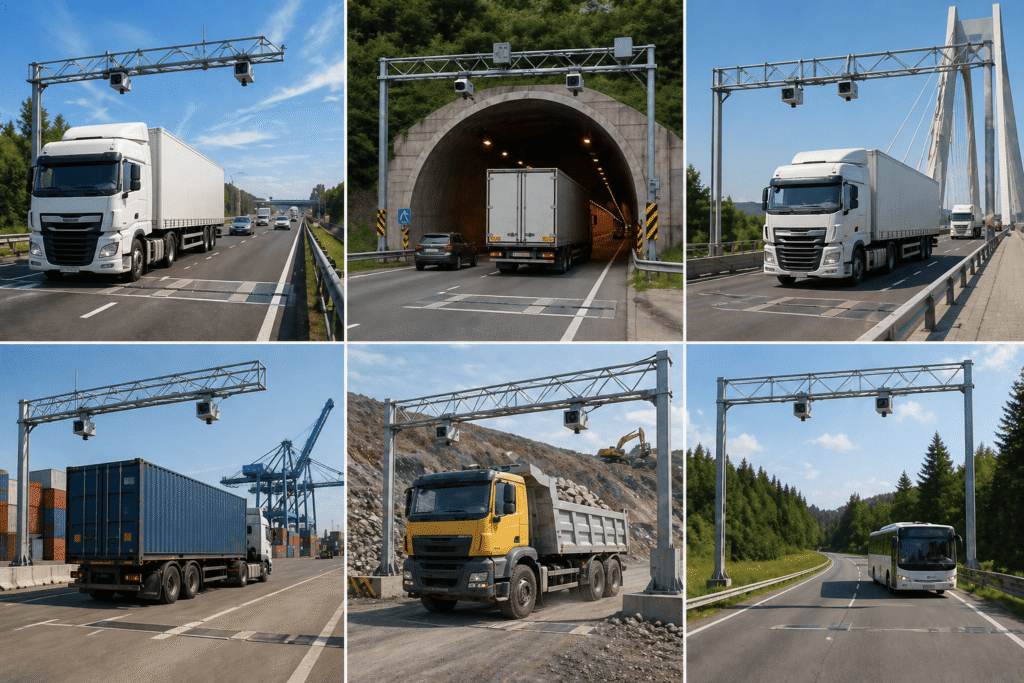
The High-Speed Weigh-in-Motion system uses sensors installed beneath the road surface to measure vehicle weight in motion. When vehicles pass over these sensors, the system captures axle load, gross vehicle weight, speed, and classification data.
In addition, advanced software processes this information instantly. As a result, it delivers accurate results even at high speeds. Furthermore, cameras and Automatic Number Plate Recognition (ANPR) systems are often integrated to improve tracking and enforcement.
Key Features of HSWIM Systems
Real-Time Data Collection
The system records vehicle data instantly without stopping traffic.
High-Speed Accuracy
It ensures precise measurements even at highway speeds.
Automatic Vehicle Classification
Vehicles are categorized based on axle configuration.
Integration with Traffic Systems
It easily connects with tolling and enforcement systems.
Low Maintenance Design
Durable sensors reduce operational downtime.

Operational Benefits of HSWIM
1. Improved Traffic Flow
Since vehicles do not stop, congestion is significantly reduced.
2. Enhanced Road Safety
Overloaded vehicles are detected quickly, preventing accidents.
3. Increased Efficiency
Authorities can monitor thousands of vehicles daily without delays.
4. Reduced Operational Costs
Less manpower is required compared to static weighbridges.
5. Data-Driven Decision Making
Accurate data helps in planning infrastructure and policies.
Technical Specifications and Performance
To understand the capability of these systems, please refer to the table below. Note that these specs can be customized for specific sites.
| Parameter | Specification |
| Speed Range | Up to 120 km/h |
| Accuracy | $\pm 5\%$ to $\pm 10\%$ |
| Sensor Type | Piezoelectric / Quartz |
| Data Output | Weight, Speed, Axle Count |
Applications of High-Speed Weigh-in-Motion
- Highway traffic monitoring
- Toll collection systems
- Overload enforcement
- Smart city infrastructure
- Logistics and fleet management
Furthermore, governments and private organizations use HSWIM systems to improve transportation efficiency and compliance.
Why Choose High-Speed Weigh-in-Motion?
Proven technology with reliable performance
Customizable solutions based on site requirements
Advanced software integration
Strong after-sales support
High durability and long lifespan
Compliance with industry standards
Frequently Asked Questions
Q1. What is High-Speed Weigh-in-Motion (HSWIM)?
This is a system that measures the weight of moving vehicles at highway speeds. It allows vehicles to pass without stopping while capturing accurate weight and traffic data in real time.
Q2. How does a High-Speed Weigh-in-Motion system work?
A High-Speed Weigh-in-Motion system uses sensors embedded in the road. As vehicles pass over them, the system records axle load, speed, and vehicle classification instantly.
Q3. How accurate is High-Speed Weigh-in-Motion?
HSWIM systems generally provide accuracy between ±5% and ±10%. However, accuracy depends on factors like sensor type, installation quality, and road conditions.
Q4. Where is High-Speed Weigh-in-Motion used?
High-Speed Weigh-in-Motion systems are widely used on highways, toll plazas, and smart city projects. They are also used for overload enforcement and traffic monitoring.
Q5. What are the benefits of High-Speed Weigh-in-Motion?
HSWIM improves traffic flow, reduces congestion, enhances road safety, and provides real-time data. In addition, it lowers operational costs and supports efficient traffic management.
Q6. Do vehicles need to stop in an HSWIM system?
No, vehicles do not need to stop. High-Speed Weigh-in-Motion systems measure weight while vehicles continue moving at normal speeds.
Q7. What types of sensors are used in HSWIM systems?
HSWIM systems use sensors such as piezoelectric, quartz, and bending plate sensors. These sensors are installed within the road surface for accurate measurements.
Q8. Can High-Speed Weigh-in-Motion systems be integrated with other technologies?
Yes, HSWIM systems can integrate with ANPR cameras, CCTV, toll systems, and traffic management software for improved monitoring and enforcement.