
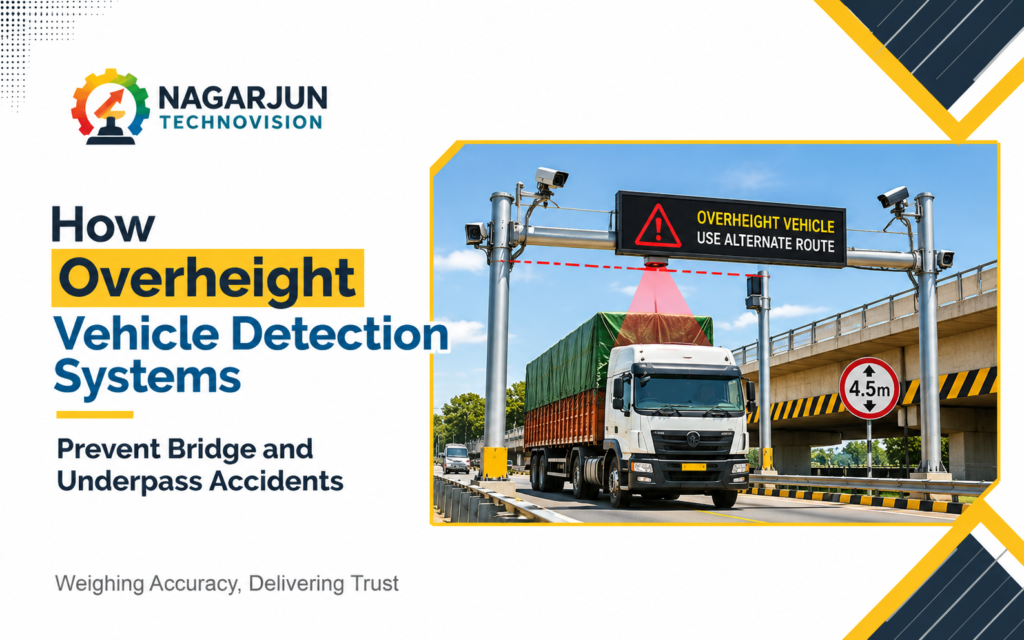
An Overheight Vehicle Detection System is an intelligent highway safety solution that helps prevent bridge and underpass accidents by detecting vehicles exceeding permitted height limits. As commercial vehicle traffic increases, protecting bridges, tunnels, and low-clearance structures becomes more important. This technology uses advanced height sensors, automatic warning signs, and monitoring equipment to alert drivers before they reach restricted structures. Consequently, highway authorities can improve road safety, reduce infrastructure damage, and minimise traffic disruptions.
An Overheight Vehicle Detection System helps prevent these accidents by identifying vehicles that exceed a predefined height limit. It uses advanced sensors and automatic warning devices to alert drivers before they reach a restricted structure.
As a result, highway authorities can improve traffic safety, protect infrastructure, and reduce unexpected road closures.
In this article, we explain how overheight detection technology works, its major components, benefits, applications, and role in modern highway infrastructure. High-Speed Weigh-in-Motion (HSWIM) technology.
What Is an Overheight Vehicle Detection System?
An Overheight Vehicle Detection System (OVDS) is an intelligent traffic safety solution designed to detect vehicles exceeding the permitted height of a road, bridge, tunnel, or underpass.
The system typically uses infrared sensors, laser-based detectors, or other height-measurement technologies. These devices monitor approaching vehicles and identify potential clearance violations.
When an overheight vehicle is detected, the system activates warning signals. These may include flashing lights, electronic message boards, or audible alarms.
Consequently, drivers receive an opportunity to stop or follow an alternative route before reaching the restricted structure.
Unlike traditional clearance signboards, automated detection systems provide active warnings based on approaching vehicles.
Why Is Vehicle Height Detection Important for Bridge Safety?
Bridges and underpasses have specific vertical clearance limits. Vehicles exceeding these limits may collide with overhead structural components.
Such incidents are commonly known as bridge strikes.
Several factors contribute to these accidents:
- Drivers may not know the actual height of their loaded vehicles.
- Oversized cargo may extend above the vehicle’s normal height.
- Drivers may overlook clearance warning signs.
- Incorrect route selection may lead trucks toward low-clearance structures.
- Road resurfacing may reduce available vertical clearance.
- Poor visibility may make conventional warning signs difficult to notice.
These situations can create significant risks for drivers and surrounding traffic.
Major Consequences of Overheight Vehicle Accidents
1. Structural Damage
A collision may damage bridge girders, beams, or other overhead components. In severe cases, authorities must inspect the structure before reopening the road.
2. Traffic Congestion
Bridge strikes may require temporary lane closures or complete traffic diversion. Consequently, commuters and freight operators experience delays.
3. Financial Losses
Infrastructure repairs, vehicle damage, emergency response, and interrupted transportation operations can generate substantial costs.
4. Safety Risks
Falling debris, damaged cargo, and sudden vehicle stops can endanger motorists and nearby road users.
Therefore, detecting overheight vehicles before they reach vulnerable infrastructure is an important preventive measure.
How Does an Overheight Vehicle Detection System Work?
An Overheight Vehicle Detection System operates through a coordinated process involving sensors, control equipment, and warning devices.
Step 1: Vehicle Approaches the Detection Zone
The system is installed at a suitable distance before a bridge, tunnel, or underpass.
As a vehicle approaches, the detection equipment monitors its height relative to a predefined clearance threshold.
Step 2: Sensors Detect Excessive Vehicle Height
Infrared or laser-based sensors identify vehicles that cross the configured detection height.
Some advanced systems can also measure vehicle profiles using LiDAR or other three-dimensional sensing technologies.
The selected technology depends on the required accuracy, roadway conditions, and project design.
Step 3: The Controller Processes the Detection Signal
The sensor transmits information to an electronic controller.
The controller evaluates the signal and determines whether an overheight warning should be activated.
Where required, the system may also process signals from multiple sensors to reduce unwanted alarms.
Step 4: Automatic Warning Signals Activate
When the system identifies an overheight vehicle, it can activate:
- LED warning signboards
- Flashing warning beacons
- Variable Message Signs (VMS)
- Audible warning devices
- Traffic signals, where integrated and approved
These warnings inform the driver about the approaching height restriction.
Step 5: Driver Takes Corrective Action
After receiving the warning, the driver should stop at a designated safe location or follow an approved alternative route.
Therefore, proper system placement and clear diversion arrangements are essential.
Step 6: Event Information Is Recorded
Where camera and software integration is available, the system can record detection events.
Recorded information may include the date, time, location, vehicle image, and alarm status.
This information helps highway operators review incidents and evaluate system performance.
Key Components of an Overheight Vehicle Detection System
An effective system combines multiple hardware and software components.
1. Height Detection Sensors
Height detection sensors are the primary sensing components.
Common technologies include infrared beam sensors, laser detectors, and LiDAR-based measurement systems.
The appropriate technology depends on the required detection method and site conditions.
2. Electronic Control Unit
The electronic control unit receives and processes signals from the detection sensors.
It also controls the connected warning devices and communication equipment.
3. LED Warning Display
Electronic warning displays communicate clear instructions to drivers.
For example, a display may indicate that the approaching vehicle exceeds the permitted height and must use another route.
4. CCTV and ANPR Cameras
CCTV cameras can provide visual evidence of detection events.
Additionally, Automatic Number Plate Recognition (ANPR) technology may identify vehicle registration numbers when integrated with suitable software.
5. Communication and Monitoring Software
Connected systems can transmit detection events to a traffic management centre.
This enables operators to monitor alarms, review records, and coordinate appropriate responses.
6. Power Supply and Protection Equipment
Reliable operation requires a suitable power supply, electrical protection, and backup arrangements where necessary.
Outdoor installations must also account for lightning exposure, voltage surges, weather conditions, and equipment maintenance.
Technologies Used in Vehicle Height Detection
Different sensor technologies offer different capabilities.
Infrared Sensors for Overheight Vehicle Detection
Infrared systems use a transmitter and receiver positioned across the roadway.
When a vehicle exceeds the configured height, it interrupts the beam and triggers a detection signal.
This approach is commonly used for threshold-based overheight detection.
Laser-Based Vehicle Height Detection
Laser-based systems detect objects passing through a defined sensing zone.
Depending on the sensor design, they can provide precise detection or distance measurement.
However, correct alignment and environmental protection remain important.
LiDAR Technology for Vehicle Height Measurement
LiDAR uses laser measurements to collect distance information.
Advanced configurations can create a vehicle profile and estimate height.
As a result, LiDAR may be suitable for applications requiring more detailed vehicle dimension information.
AI Camera Integration for Overheight Detection
Artificial intelligence can support vehicle classification, image analysis, and event verification.
However, ordinary camera images alone may not provide reliable physical height measurements without suitable calibration and measurement methods.
Therefore, AI cameras are often most useful when combined with dedicated sensing equipment.
Benefits of Overheight Vehicle Detection Systems
1.How Overheight Detection Prevents Bridge Accidents
The main benefit is early detection of vehicles that may exceed structural clearance limits.
Timely warnings give drivers an opportunity to avoid a collision.
2. Protects Highway Infrastructure
Preventing vehicle strikes helps reduce the risk of damage to bridges, tunnels, and other overhead structures.
This can also reduce avoidable repair requirements.
3. Improves Road Safety
Automated warnings provide additional information to drivers approaching restricted areas.
Consequently, they support safer decisions when combined with appropriate road signs and traffic management.
4. Reduces Traffic Disruptions
Bridge collisions can lead to emergency closures and lengthy diversions.
Reducing these incidents helps maintain smoother traffic movement.
5. Supports Automated Monitoring
Integrated software can collect detection records and alert traffic management personnel.
These records support incident investigation and operational planning.
6. Supports Smart Highway Development
Overheight detection technology can operate as part of a wider Intelligent Transportation System (ITS).
For example, it may be integrated with CCTV, traffic signals, ANPR, and central monitoring platforms.
How Overheight Vehicle Detection Systems Improve Highway Safety
An Overheight Vehicle Detection System plays an important role in improving highway safety and protecting critical infrastructure.
Firstly, it identifies vehicles exceeding permitted height limits before they reach bridges or underpasses. Secondly, it activates automatic warning signals to alert drivers about potential clearance restrictions. Furthermore, advanced sensors help monitor approaching vehicles and support reliable detection.
In addition, CCTV cameras and monitoring software can record detection events for further analysis. Moreover, integrating these technologies with intelligent traffic management systems improves operational visibility.
For example, highway authorities can use warning displays to guide overheight vehicles toward safer alternative routes. Similarly, traffic management personnel can review recorded events and identify locations requiring additional safety measures.
As a result, the risk of avoidable bridge strikes and infrastructure damage may decrease. Consequently, highway operators can reduce unexpected traffic disruptions and improve road network reliability.
However, proper sensor installation, accurate clearance assessment, and regular maintenance remain essential for effective operation. Therefore, investing in suitable vehicle height detection technology can strengthen preventive road safety measures.
Ultimately, combining automated detection, timely warnings, and responsible driver behaviour helps create safer highways for commercial and passenger vehicles.
Applications of Overheight Vehicle Detection Systems
These systems are particularly useful at locations where vehicles face restricted vertical clearance.
Road Underpasses: Detect trucks approaching low-clearance road sections.
Railway Overbridges and Underpasses: Help protect structures where roads pass beneath railway infrastructure.
Highway Bridges: Provide early warnings near vulnerable overhead structural elements.
Tunnels: Alert drivers before entering tunnels with height restrictions.
Industrial Entrances: Identify oversized vehicles approaching factory gates, warehouses, and loading facilities.
Toll Plazas: Help monitor vehicle clearance where overhead structures or equipment impose height restrictions.
The installation design must account for vehicle speed, stopping distance, lane width, and safe diversion availability.
Overheight Detection vs Traditional Height Restriction Signs
Both approaches contribute to road safety. However, their functions differ.
| Feature | Traditional Signs | Automated Detection |
|---|---|---|
| Displays clearance information | Yes | Yes, through integrated signs |
| Detects approaching overheight vehicles | No | Yes |
| Activates vehicle-specific warnings | No | Yes |
| Supports automatic event logging | No | With integration |
| Supports camera integration | No | Yes |
| Requires electronic maintenance | No | Yes |
Traditional signs remain essential. Nevertheless, automated detection provides an additional layer of protection at locations with a significant collision risk.
Important Factors Before Installing an Overheight Detection System
Proper engineering and site assessment are essential for reliable operation.
Accurate Clearance Assessment
The actual available clearance must be surveyed and verified.
Engineers should consider road gradients, pavement conditions, structural geometry, and applicable safety margins.
Correct Sensor Positioning
Sensors should be positioned where they can detect approaching vehicles reliably.
Poor alignment may lead to missed detections or unwanted alarms.
Adequate Warning Distance
Drivers need sufficient distance to recognise a warning and respond safely.
Therefore, detection and warning locations must consider approach speed, road geometry, stopping distance, and safe diversion points.
Environmental Protection
Outdoor systems face dust, rain, vibration, sunlight, and temperature changes.
Suitable equipment enclosures, mounting arrangements, and preventive maintenance help maintain performance.
Overheight Vehicle Detection System Maintenance
Sensors, warning signs, controllers, and communication devices require periodic checks.
Additionally, operators should verify detection performance after road resurfacing or changes in clearance conditions.
Role of Overheight Detection in Smart Highway Infrastructure
Modern highways increasingly use digital systems to improve safety and operational visibility.
Overheight detection can contribute to this development by combining physical sensors with automated warnings and connected monitoring.
For example, a highway monitoring platform may integrate:
- Overheight vehicle detection
- Overweight vehicle monitoring
- Automatic vehicle classification
- ANPR-based identification
- CCTV surveillance
- Centralised traffic management
Although these technologies perform different functions, integrating them can help operators understand vehicle movements and potential infrastructure risks.
For instance, Weigh-in-Motion (WIM) technology measures vehicle axle loads and weight while vehicles move across instrumented road sections.
In contrast, overheight detection focuses on vertical clearance.
Together, these technologies can support a broader approach to commercial vehicle monitoring and highway safety.
How Nagarjun Technovision Supports Intelligent Highway Infrastructure
Nagarjun Technovision Pvt. Ltd. works in vehicle weighing and highway infrastructure technology, including Weigh-in-Motion systems, weighbridge solutions, and associated electronic equipment.
As highway infrastructure becomes increasingly technology-driven, integrating accurate sensing, reliable control equipment, and digital monitoring is becoming more important.
Overheight vehicle detection represents another important application of intelligent sensing technology in road safety.
By understanding how height detection, vehicle weighing, and monitoring systems work together, highway operators can make better decisions when planning infrastructure upgrades.
For information about Nagarjun Technovision’s existing weighing and highway technology solutions, visit www.nagarjuntechnovision.com.
Conclusion
An Overheight Vehicle Detection System is an important safety technology for bridges, tunnels, and underpasses with restricted vertical clearance.
By identifying vehicles that exceed a configured height threshold, the system can activate warnings before a collision occurs.
Furthermore, integration with cameras, communication networks, and traffic management software can improve monitoring and incident response.
However, technology alone cannot eliminate every bridge strike. Correct installation, accurate clearance information, suitable warning distances, and driver compliance remain essential.
As highway networks develop, overheight detection systems can play an increasingly valuable role in protecting infrastructure and improving road safety.
Frequently Asked Questions (FAQs)
Q1. What is an Overheight Vehicle Detection System?
An Overheight Vehicle Detection System is an electronic safety solution that identifies vehicles exceeding a predefined height limit. It activates warnings to help drivers avoid collisions with bridges, tunnels, and underpasses.
Q2. How does an overheight vehicle detection system work?
The system uses infrared, laser, or other suitable sensors to detect vehicles exceeding a configured height threshold. A controller processes the signal and activates warning devices such as LED signs or flashing lights.
Q3. Which sensors are used for vehicle height detection?
Common technologies include infrared beam sensors, laser detectors, and LiDAR sensors. The selection depends on the measurement requirements, installation conditions, and system design.
Q4. Can overheight detection systems prevent bridge accidents?
They can significantly reduce the risk of bridge strikes by warning drivers before they reach restricted structures. However, effectiveness depends on correct installation, warning visibility, and driver response.
Q5. Can overheight detection systems work at night?
Yes. Suitable infrared and laser-based detection systems can operate during both day and night. Nevertheless, performance depends on sensor specifications, environmental conditions, and maintenance.
Q6. What is the difference between overheight detection and Weigh-in-Motion?
Overheight detection identifies vehicles exceeding a height restriction. Weigh-in-Motion measures vehicle weight and axle loads while vehicles are moving. Both technologies support highway monitoring, but they measure different parameters.
Q7. Can an overheight detection system be connected to ANPR cameras?
Yes. A compatible system can integrate ANPR cameras to associate detection events with vehicle registration information, subject to applicable legal and privacy requirements.
Q8. Where should overheight detection sensors be installed?
Sensors should be installed upstream of the restricted structure at a location that provides adequate detection reliability and sufficient distance for drivers to respond safely.
Q9. Does an overheight detection system require regular maintenance?
Yes. Routine maintenance may include sensor cleaning, alignment checks, electrical inspections, warning display testing, and communication verification.
Q10. Why are overheight vehicle detection systems important for Indian highways?
Indian highways carry diverse commercial vehicles, including trucks transporting containers, machinery, and oversized cargo. Overheight detection can provide an additional safety measure at vulnerable bridges, underpasses, and other restricted locations.
Explore Intelligent Highway Technology with Nagarjun Technovision
Discover our Weigh-in-Motion systems, weighbridge solutions, and highway weighing technology.
Nagarjun Technovision Pvt. Ltd.