By Nagarjun Technovision
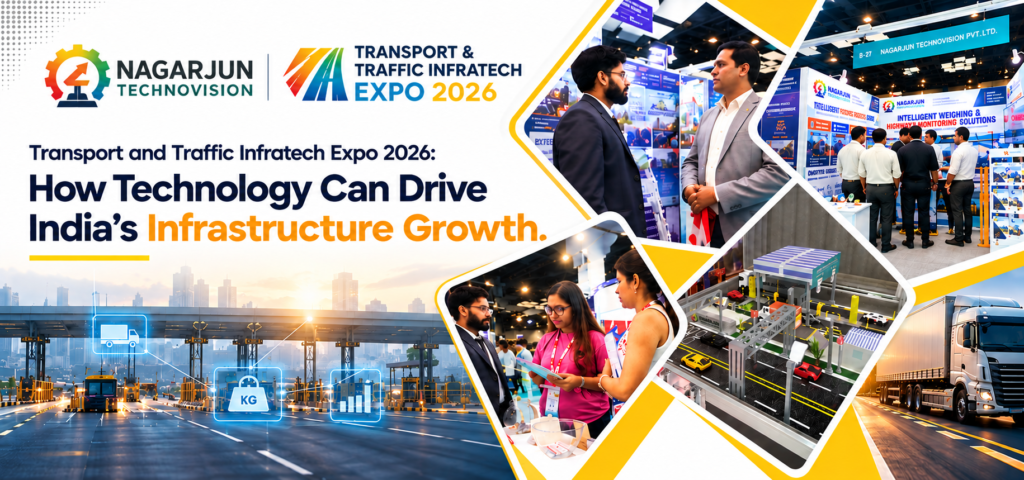
Transport and Traffic Infratech Expo 2026, showcases the latest developments in smart transportation technology and intelligent transport systems. This transport and traffic infrastructure exhibition highlights innovations in traffic management, digital tolling, road safety and weighbridge automation. These road infrastructure technologies can support India’s infrastructure growth by improving transportation efficiency, vehicle monitoring and infrastructure managementTransport and traffic infrastructure exhibition.
Held on 7–8 October 2026 at Hall 1, Bharat Mandapam, New Delhi, the event focused on intelligent transportation systems, AI-powered traffic management, road safety, smart parking and connected mobility. It also created a platform for businesses and professionals to explore emerging infrastructure solutions.
For Nagarjun Technovision, the expo provided an opportunity to connect industrial weighing technology with the broader development of India’s transportation and infrastructure ecosystem. After all, modern infrastructure needs more than roads and highways. It also requires accurate data, efficient vehicle movement, dependable equipment and connected systems.
In this article, we explore how technology can support India’s infrastructure growth and why innovations such as intelligent traffic systems, automation and weigh-in-motion solutions matter for the country’s development.
The Transport and Traffic Infratech Expo 2026 also highlights the growing importance of smart transportation technology, intelligent traffic management and road infrastructure innovation. These solutions can support India’s transport infrastructure development by improving traffic monitoring, road safety and vehicle movement. In addition, modern weighbridge technology and automated weighing systems can help businesses manage vehicle loads and maintain accurate records.
1. Transport and Traffic Infratech Expo 2026: A Vision for Smarter Infrastructure
The Transport and Traffic Infratech Expo 2026 highlighted a growing need for connected and intelligent transportation solutions. As cities expand and freight movement increases, traditional infrastructure alone cannot address every operational challenge.
Instead, infrastructure planners and businesses need technologies that help them monitor traffic, manage vehicle movement, improve access to information and make informed decisions.
For example, intelligent transportation systems can use sensors, cameras, communication networks and software to collect information about road conditions and traffic activity. As a result, transport authorities can better understand changing conditions and respond to selected incidents more effectively.
Similarly, digital tolling, automatic number plate recognition and smart parking systems can help improve specific parts of the transport journey when properly designed and implemented.
The expo’s focus on these technologies reflects a broader opportunity for India: developing infrastructure that is not only larger, but also safer, more efficient and better connected.
2. How Smart Transportation Technology Can Support India’s Growth
Transportation connects people, industries, markets and essential services. Therefore, improving the efficiency of transport networks can support economic activity across many sectors.
Technology can contribute to this progress in several ways.
Intelligent traffic management:Transport and Traffic Infratech Expo 2026
Traffic monitoring systems can use cameras, sensors and data analysis to identify congestion, detect selected incidents and provide useful information to traffic operators.
Consequently, authorities may be able to make better-informed decisions about traffic control and incident response. However, the results depend on the quality of the system, road conditions and the effectiveness of its implementation.
Digital tolling and automated identification:Transport and Traffic Infratech Expo 2026
Electronic toll collection and automatic number plate recognition can support faster identification and more organised vehicle processing at suitable locations.
Moreover, digital records can help operators review transactions and manage information more efficiently. These systems can also contribute to more connected transport operations when they work with compatible platforms.
Data-driven infrastructure maintenance:Transport and Traffic Infratech Expo 2026
Technology can help infrastructure agencies monitor road conditions and identify potential maintenance needs. For instance, survey vehicles, digital mapping and image analysis can support the inspection of road surfaces and other highway assets.
The National Highways Authority of India has described the use of technologies such as network survey vehicles, drones and AI-powered dashcam analytics for highway asset monitoring. These approaches can support more informed maintenance planning.
For India, the opportunity is clear: better information can help infrastructure operators identify problems, prioritise work and manage public assets more effectively.
3. Transport and Traffic Infratech Expo 2026: Road Safety and Vehicle Load Management
Road safety is a major part of infrastructure development. While road design, traffic enforcement, driver awareness and vehicle maintenance all matter, managing heavy vehicle loads is another important consideration.
Overloaded vehicles can create safety risks and place additional stress on road infrastructure. Therefore, reliable vehicle weight information can support appropriate monitoring and compliance processes.
This is where weighing technology becomes relevant.
A conventional weighbridge measures a vehicle while it is stationary on a weighing platform. In contrast, a weigh-in-motion (WIM) system measures vehicle weight or axle loads while the vehicle moves over designated sensors, depending on the system’s design.
These technologies serve different purposes. Static weighbridges are widely used for industrial transactions, material records and controlled weighing operations. Meanwhile, suitable WIM systems can support vehicle screening, traffic monitoring and load assessment in specific highway applications.
The right system depends on the required accuracy, operating environment, traffic volume and applicable standards.
For this reason, weighing technology should be considered as part of a wider infrastructure strategy rather than as an isolated piece of equipment.
4. The Role of Automation in Modern Weighbridge Solutions
Industrial facilities, logistics centres, mining operations and manufacturing plants often process large numbers of vehicles. When weighing procedures depend entirely on manual data entry, businesses may face avoidable delays, inconsistent records and additional administrative work.
Automation can help address some of these challenges.
A modern weighing workflow may combine several technologies:
- Vehicle identification through suitable cameras or identification systems.
- Weight measurement through a weighbridge or compatible WIM system.
- Electronic recording of weight and transaction details.
- Software that stores and organises weighing records.
- Reporting tools that help authorised users review operational data.
When these components work together, businesses can establish a more organised weighing process. In addition, digital records can make it easier to retrieve transaction information and review material movement.
However, automation should match the actual requirements of the site. Equipment compatibility, installation quality, staff training, maintenance and data security all deserve attention.
At Nagarjun Technovision, weighing equipment and related automation solutions form part of the wider discussion about making industrial vehicle operations more efficient and dependable.
Businesses can explore our weighbridge and weigh-in-motion solutions to understand the available technologies for different applications.
5. How Digital Infrastructure Can Improve Logistics and Supply Chains
India’s logistics network connects farms, factories, warehouses, ports, mines, distribution centres and retail markets. Efficient movement between these locations supports businesses and helps goods reach their destinations.
Nevertheless, physical transportation is only one part of the process. Reliable information also matters.
Digital systems can help businesses record vehicle movements, organise dispatch information and coordinate selected operational activities. When systems share compatible data, teams can reduce repeated manual work and improve access to records.
For example, a manufacturing facility may use a weighbridge to record incoming raw materials and outgoing finished products. With suitable software integration, authorised staff can retrieve transaction histories and compare records more easily.
Similarly, a logistics operator may use vehicle identification and digital weighing records to support dispatch procedures.
These examples show how relatively focused technologies can contribute to a more connected supply chain. However, the benefits depend on accurate data, suitable software and well-defined operating procedures.
As a result, India’s infrastructure growth should include investment in both physical connectivity and the digital systems that support everyday operations.
6. Why Reliable Equipment and Maintenance Matter for Smart Infrastructure
Advanced technology delivers value only when it works reliably in real operating conditions.
For example, a weighbridge must have a suitable foundation, correctly installed components and appropriate calibration to support dependable measurements. Likewise, automated systems need compatible hardware, stable software and regular checks.
Without proper maintenance, even a well-designed system may experience performance issues or operational interruptions.
Businesses should therefore consider the complete equipment lifecycle before investing in infrastructure technology. This includes site assessment, installation, commissioning, calibration, maintenance and technical support.
Moreover, solutions should suit the operating environment. A system designed for a busy highway may have different requirements from one installed at a mining site or manufacturing facility.
Nagarjun Technovision provides information about its installation, calibration, maintenance and other services to help businesses understand the importance of ongoing support.
Ultimately, reliable infrastructure depends on more than purchasing advanced equipment. It requires careful planning, responsible operation and consistent maintenance.
7. Building Smarter Roads and More Connected Cities
Smart infrastructure brings together physical assets, digital tools and operational processes. Rather than treating each component separately, connected systems can help infrastructure operators develop a more complete understanding of their networks.
For instance, traffic monitoring can provide information about road conditions, while digital mapping can support infrastructure planning. Similarly, electronic tolling can help manage vehicle transactions, and suitable vehicle weighing systems can provide load-related information.
When these technologies are planned carefully, they may support better coordination between different parts of the transportation ecosystem.
However, smart infrastructure is not simply about installing more sensors or software. It also requires clear objectives, reliable connectivity, trained personnel, data protection and long-term planning.
Furthermore, technology should address practical needs. A smaller facility may benefit most from reliable weighing equipment and well-organised records, while a high-volume transport corridor may require integrated traffic monitoring and specialised vehicle screening.
The goal should be to select the right technology for each application instead of assuming that one solution fits every location.
8. What This Means for Nagarjun Technovision and India’s Infrastructure Future
The Transport and Traffic Infratech Expo 2026 reinforces the importance of understanding how industrial weighing connects with transportation, logistics and infrastructure development.
For Nagarjun Technovision, this connection creates several areas for continued focus.
First, businesses need weighing solutions that match their vehicle types, operating conditions and measurement requirements. Proper assessment helps identify the right equipment for each application.
Second, digital integration deserves attention. Where suitable, vehicle identification, weighing software and automated record management can help organisations improve the way they handle transactions.
Third, dependable service remains essential. Installation, calibration, maintenance and technical assistance help businesses maintain reliable operations throughout the equipment lifecycle.
Finally, industry development requires ongoing learning. As transportation technology advances, businesses must continue evaluating relevant systems, understanding customer requirements and explaining technical options clearly.
These priorities can help connect technological innovation with practical industrial needs. They also reflect an important principle: infrastructure development becomes more effective when equipment, information and operational processes work together.
9. The Road Ahead: Technology for a More Developed India
India’s infrastructure future will depend on several connected priorities, including road development, public transportation, logistics efficiency, safety, digitalisation and sustainable asset management.
Technology can support these priorities by improving the collection and use of information. Intelligent traffic systems can assist monitoring, digital platforms can organise records, and suitable weighing solutions can support vehicle load management and industrial operations.
At the same time, successful implementation requires more than technological ambition. Projects need careful planning, appropriate investment, reliable equipment, skilled professionals and effective maintenance.
Transport and Traffic Infratech Expo 2026 brought these wider themes into focus by providing a platform for exploring technologies related to intelligent mobility, traffic management and smart infrastructure.
For businesses such as Nagarjun Technovision, the opportunity lies in contributing to this evolving ecosystem through dependable weighing solutions, practical technical support and a continued focus on customer requirements.
A more developed India will need infrastructure that does more than connect places. It will need systems that help people, goods and information move safely and efficiently.
Conclusion
The Transport and Traffic Infratech Expo 2026 highlighted the importance of technology in shaping the future of transportation and infrastructure in India.
From intelligent traffic management and digital tolling to vehicle weighing, automation and data-driven maintenance, different technologies can help address specific operational challenges. When selected and implemented appropriately, they can support better information management, more organised processes and improved infrastructure operations.
For Nagarjun Technovision, industrial weighing is an important part of this wider picture. Accurate measurements, suitable equipment, digital integration and reliable maintenance can all contribute to the daily operations that keep industries and supply chains moving.
As India continues to develop its infrastructure, the next step is to connect innovation with real-world requirements. By focusing on practical solutions, responsible implementation and continuous improvement, technology can help support a safer, smarter and more connected infrastructure network.
Frequently Asked Questions (FAQs)
1. What is Transport and Traffic Infratech Expo 2026?
Transport + Traffic Infratech Expo 2026 is an industry exhibition focused on transportation, traffic management, road infrastructure, road safety and smart mobility technologies. It brings together industry professionals and technology providers to explore solutions for India’s evolving transport infrastructure.
2. How can technology improve India’s transport infrastructure?
Technology can improve transport infrastructure through intelligent traffic management, automated tolling, vehicle monitoring, digital data systems and predictive maintenance. These solutions can help reduce delays, improve road safety and support more efficient transportation networks.
3. What role do weighbridges play in road infrastructure?
Weighbridges measure the weight of vehicles and their loads. Accurate weighing helps businesses maintain reliable weight records, manage cargo movement and support compliance with applicable vehicle weight regulations.
4. What is a Weigh-in-Motion (WIM) system?
A Weigh-in-Motion system measures the weight of a moving vehicle without requiring it to stop on a conventional static weighbridge. Depending on the system and application, WIM technology can support traffic monitoring, vehicle weight screening and road infrastructure management.
5. How can automation improve weighbridge operations?
Automation can connect vehicle identification, weighing instruments and weighing software. This can reduce manual data entry, improve record management and help operators process vehicles more efficiently.
6. Why is accurate vehicle weight measurement important?
Accurate vehicle weight measurement helps businesses maintain dependable records, manage cargo efficiently and identify potential overloading. It also supports better operational decisions and helps protect road infrastructure when used alongside applicable weight regulations.
7. How does Nagarjun Technovision support infrastructure development?
Nagarjun Technovision provides weighbridge-related products and services, including solutions for weighing operations, installation, calibration and maintenance. Reliable weighing systems can help businesses improve operational control and manage vehicle weight records more effectively.
8. Where can I learn more about Transport + Traffic Infratech Expo 2026?
Visit the official Transport + Traffic Infratech Expo website for event information and updates. You can also explore Nagarjun Technovision to learn more about its weighbridge solutions and services.
About Nagarjun Technovision
Nagarjun Technovision works in industrial weighing and infrastructure-related solutions, including weighbridges, weigh-in-motion systems and associated services. To learn more about available solutions, visit the official Nagarjun Technovision website.