
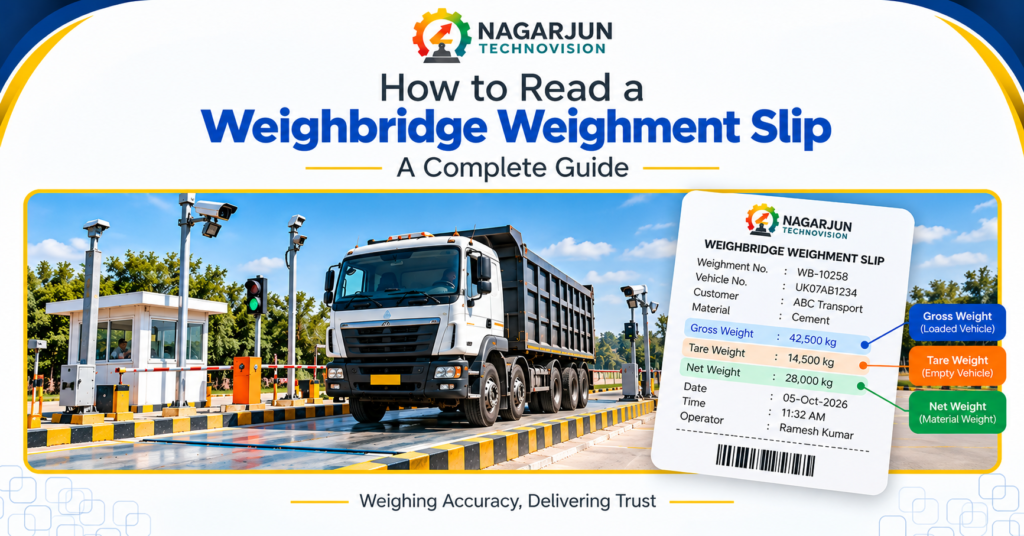
A weighbridge weighment slip is an important document that the weighbridge system generates after weighing a vehicle. It records essential information such as the vehicle number, gross weight, tare weight, net weight, date and time of weighing, and material details.
For businesses involved in transportation, mining, construction, cement, agriculture, logistics, manufacturing, and other industries, understanding this slip is important for maintaining accurate records, managing inventory, verifying material movement, and preventing billing or dispatch errors.
But what do all the numbers and fields on a weighbridge slip actually mean?
we will explain, we will explain how to read a weighbridge weighment slip, what each important field means, and how gross, tare, and net weight are calculated.
What Is a Weighbridge Weighment Slip?
A weighbridge weighment slip is a printed or digital record generated when a vehicle is weighed on an industrial weighbridge.
It records the vehicle’s weight at the time of weighing.
Depending on the weighbridge system and software being used, a weighment slip may contain:
- Vehicle registration number
- Weighment number
- Gross weight
- Tare weight
- Net weight
- Date and time
- Material or commodity name
- Customer or supplier name
- Driver details
- Operator details
- Weighbridge identification
- Weighing direction or transaction type
Modern weighbridge software can automatically capture and store this information, reducing manual data entry and improving record accuracy.
Understanding the Three Main Weights
The three most important values on a weighbridge slip are:
Gross Weight → Tare Weight → Net Weight
First, the three most important values on a weighbridge slip are:
1. Gross Weight
Gross weight is the total weight of the loaded vehicle.
It includes:
Vehicle + Driver + Fuel + Material/Load
For example, if a loaded truck weighs 42,500 kg.
The gross weight is normally recorded when the vehicle enters the weighbridge carrying its load.
2. Tare Weight
Tare weight is the weight of the empty vehicle without the material being transported.
For example:
- Empty truck = 14,500 kg
- Loaded truck = 42,500 kg
For example, consider these two measurements:
The operator may record the tare weight during a separate empty-vehicle weighing or retrieve it from the vehicle’s stored record…
3. Net Weight
Net weight represents the actual weight of the material or goods being transported.
Therefore, you can calculate it using:
Net Weight = Gross Weight − Tare Weight
For example:
Gross Weight = 42,500 kg
Tare Weight = 14,500 kg
Therefore:
Net Weight = 42,500 − 14,500 = 28,000 kg
So, the actual material loaded on the truck weighs 28,000 kg, or 28 tonnes.
Example of a Weighbridge Weighment Slip
A typical weighment slip may look something like this:
| Field | Example |
|---|---|
| Weighment No. | WB-10258 |
| Vehicle No. | UK07AB1234 |
| Customer | ABC Transport |
| Material | Cement |
| Gross Weight | 42,500 kg |
| Tare Weight | 14,500 kg |
| Net Weight | 28,000 kg |
| Date | 05-Oct-2026 |
| Time | 11:32 AM |
Now let’s understand what each section tells us.
Vehicle Number
The vehicle registration number identifies which vehicle was weighed.
It is important for connecting the weight record with the correct truck and transaction.
Material
This field identifies the material being transported, such as:
- Cement
- Sand
- Aggregate
- Coal
- Steel
- Grain
- Minerals
- Construction materials
Gross Weight
This is the total weight of the loaded vehicle.
Tare Weight
This is the empty vehicle weight.
Net Weight
This is the actual material weight after subtracting the tare weight from the gross weight.
How Is Net Weight Calculated?
The basic calculation is simple:
Net Weight = Gross Weight − Tare Weight
For example, let’s take another calculation.
Suppose:
Gross Weight = 65,800 kg
Tare Weight = 18,300 kg
Then:
Net Weight = 65,800 − 18,300
Net Weight = 47,500 kg
Therefore, the vehicle is carrying 47.5 tonnes of material.
This calculation is one of the most important things to verify when checking a weighbridge weighment slip.
What Other Information Can Be Found on a Weighbridge Slip?
In addition, modern weighment slips can contain several other details besides weight values.
1. Weighment Number
A unique transaction or weighment number helps identify a particular weighing record.
It can be useful when searching for an old transaction in weighbridge software.
2. Date and Time
The date and time indicate when the vehicle was weighed.
This information helps businesses maintain chronological transaction records and verify material movement.
3. Vehicle Registration Number
The registration number connects the recorded weight with the specific vehicle.
For automated weighbridge systems, technologies such as ANPR cameras or RFID can help capture vehicle identification information.
4. Customer or Supplier Name
The slip may contain the name of the customer, supplier, transporter, or company associated with the transaction.
5. Material Name
Recording the material helps businesses track what is being transported and connect the weight with inventory or dispatch records.
6. Operator Details
Some systems record the name or identification of the operator who handled the transaction.
7. Weighbridge Information
Moreover, a weighment slip is more than just a piece of paper.
Why Is a Weighment Slip Important?
A weighment slip is more than just a piece of paper containing weight values.
It can serve as an important operational record for businesses.
Accurate Material Measurement
First, the slip records the measured quantity…
Dispatch and Receiving Records
In addition, businesses can use weighment records to verify how much material was dispatched or received.
Billing and Invoicing
Furthermore, businesses can use net material weight can be used as an input for billing, depending on the business process and applicable commercial terms.
Inventory Management
Accurate weight records can help businesses maintain better material inventory records.
Transaction Tracking
A unique weighment number, vehicle number, date, and time can make it easier to locate a particular transaction.
Compliance and Documentation
In some industries, accurate weight records are important for documentation and regulatory processes.
How to Check a Weighbridge Slip for Errors
Before accepting a weighment record, it is useful to check the important fields.
Check 1: Vehicle Number
First, check the vehicle number belongs to the vehicle that was actually weighed.
Check 2: Gross Weight
Confirm that the gross weight corresponds to the loaded vehicle.
Check 3: Tare Weight
Verify that the tare weight belongs to the same vehicle and represents its empty weight according to the weighing process.
Check 4: Net Weight
Check the calculation:
Gross Weight − Tare Weight = Net Weight
Check 5: Date and Time
Make sure the weighing date and time are correct.
Check 6: Material Details
Verify that the material mentioned on the slip matches the actual material being transported.
Check 7: Weighment Number
Keep the transaction or weighment number for future reference.
These simple checks can help reduce mistakes in weighing records and material documentation.
Manual vs Automated Weighment Slips
Traditional weighbridges may require operators to manually enter several details.
However, modern automated systems can reduce manual intervention by integrating different technologies.
For example:
Vehicle Identification → Weighing → Data Capture → Software Processing → Weighment Slip
Depending on the system, vehicle identification may be supported by:
- RFID
- ANPR cameras
- Vehicle databases
- Automated barriers
- Traffic signals
- Weighbridge software
Automation can help reduce repetitive data entry and create a more consistent digital record of each weighing transaction.
Digital Weighment Records
Modern weighbridge management software can store weighment transactions digitally instead of relying only on printed slips.
Digital records can make it easier to:
- Search previous transactions
- Track vehicle-wise weighing history
- Generate reports
- Monitor material movement
- Export data
- Integrate with business systems
- Maintain centralized records
For businesses handling a large number of vehicles every day, digital weighment management can significantly simplify record keeping.
Common Mistakes When Reading a Weighbridge Slip
Some common mistakes include:
Confusing Gross Weight With Net Weight
The gross weight includes the vehicle and its load. It is not the actual material weight.
Using Tare Weight as Material Weight
Tare weight represents the empty vehicle weight, not the transported material.
Ignoring Units
Weight may be displayed in kg, tonnes, or other units. Always check the unit before using the value.
Not Checking Vehicle Details
A correct weight with an incorrect vehicle number can still create a serious documentation problem.
Not Verifying the Calculation
Always check:
Gross − Tare = Net
This quick calculation can help identify obvious data-entry or recording errors.
Why Accurate Weighment Records Matter
First, accurate weighment records help businesses maintain reliable transaction data. Moreover, they make it easier to track vehicles, materials, and deliveries. For example, a business can compare previous weighing records to identify unusual differences. In addition, digital records can simplify reporting and reduce repetitive data entry. However, businesses should still verify important details before finalizing a transaction. Therefore, checking the vehicle number, gross weight, tare weight, and net weight remains important. Furthermore, proper record keeping supports better inventory and billing processes. As a result, businesses can improve operational control and reduce avoidable documentation errors. Finally, a well-organized weighment system helps teams manage daily weighing operations more efficiently.
Frequently Asked Questions
What is a weighbridge weighment slip?
A weighbridge weighment slip is a printed or digital record containing the details of a vehicle weighing transaction, including gross weight, tare weight, net weight, vehicle number, date, time, and other relevant information.
What is gross weight on a weighbridge slip?
Gross weight is the total weight of the loaded vehicle, including the vehicle and its load.
What is tare weight?
Tare weight is the weight of the empty vehicle without the transported material.
What is net weight?
Net weight is the actual weight of the material being transported.
Net Weight = Gross Weight − Tare Weight
How do you calculate net weight from a weighbridge slip?
Subtract the tare weight from the gross weight.
For example:
50,000 kg − 15,000 kg = 35,000 kg
Can weighbridge slips be stored digitally?
Yes. Modern weighbridge software can store weighing transactions digitally and can provide search, reporting, and data-management capabilities.
What should I check on a weighbridge slip?
Check the vehicle number, gross weight, tare weight, net weight, material, date, time, weighment number, and units.
What information is usually included on a weighbridge weighment slip?
A weighbridge weighment slip can include the vehicle number, weighment number, gross weight, tare weight, net weight, material name, customer or supplier details, date, time, and operator information.
Is a weighbridge slip proof of weight?
A weighbridge slip serves as a record of the weight measured during a particular weighing transaction. Its acceptance as an official or legal document depends on the applicable regulations, industry requirements, and the weighing system being used.
What is the difference between gross weight and net weight?
Gross weight is the total weight of the loaded vehicle, while net weight is the weight of the material being transported.
Net Weight = Gross Weight − Tare Weight
Can the tare weight be stored in weighbridge software?
Yes. Depending on the system, a vehicle’s tare weight can be stored in the weighbridge software and retrieved during a subsequent transaction. The exact workflow depends on how the weighbridge is configured.
What happens if the gross weight and tare weight are incorrect?
Incorrect gross or tare weight can result in an incorrect net weight. This may affect material records, billing, inventory, dispatch documentation, and other business records. The weighing transaction should therefore be verified before it is finalized.
What units are commonly used on a weighbridge slip?
Weighbridge systems commonly display weight in kilograms (kg) or tonnes (t). Always check the unit shown on the slip before interpreting or recording the weight.
Can a weighbridge generate a digital weighment slip?
Yes. Modern weighbridge software can generate and store digital weighing records. Depending on the system, these records may also be printed, exported, searched, or integrated with other business software.
Can RFID or ANPR be used with a weighbridge?
Yes. RFID and ANPR technologies can be integrated with weighbridge systems for vehicle identification and automation. RFID can identify vehicles using tags, while ANPR cameras can capture vehicle registration numbers.
How can I verify the net weight on a weighbridge slip?
To verify the net weight, subtract the tare weight from the gross weight:
Gross Weight − Tare Weight = Net Weight
For example, if the gross weight is 60,000 kg and the tare weight is 20,000 kg:
60,000 − 20,000 = 40,000 kg
The net weight should therefore be 40,000 kg.
How long should weighbridge records be maintained?
The required retention period can vary depending on the business, industry, applicable regulations, and internal record-keeping policies. Businesses should follow the requirements applicable to their operations.
Can weighbridge data be integrated with ERP or accounting software?
Yes. Depending on the available system and integration options, weighbridge data can be connected with ERP, accounting, inventory, or other business-management software to reduce manual data entry and improve record management.
What should I do if the weight on the slip looks incorrect?
First, check the vehicle number, gross weight, tare weight, net weight, unit, date, and time. If the calculation or recorded weight appears incorrect, the transaction should be reviewed by the responsible weighbridge operator or authorized personnel before the record is used for billing or documentation.
Conclusion
Understanding a weighbridge weighment slip is important for anyone involved in vehicle weighing, material transportation, dispatch, receiving, logistics, or industrial operations.
The most important values to understand are:
Gross Weight = Total loaded vehicle weight
Tare Weight = Empty vehicle weight
Net Weight = Actual material weight
By checking these values along with the vehicle number, material details, date, time, and weighment number, businesses can maintain more reliable weighing and transaction records.
With modern weighbridge automation and software, these records can also be captured, stored, and managed digitally, helping businesses improve operational efficiency and reduce manual errors.
For businesses looking for reliable industrial weighbridge solutions, weighing systems, automation, and software integration, choosing the right weighing setup can make a significant difference in day-to-day operations.