
Introduction
A load cell is the heart of every weighbridge. No matter how advanced your weighing indicator or software is, the system is only as accurate as the load cells installed beneath the platform.
Choosing the wrong load cell can result in inaccurate readings, frequent maintenance, reduced lifespan, and costly downtime. Whether you’re installing a new truck weighbridge or upgrading an existing one, understanding different load cell types is essential.
In this guide, we’ll explain the most common load cell types used in weighbridges, compare their advantages and disadvantages, and help you determine which one is best suited for your application.
What Are Load Cell Types for Weighbridge?
A load cell is a force sensor that converts mechanical force into an electrical signal. When a vehicle passes over the weighbridge, the applied force slightly deforms the load cell. Internal strain gauges detect this deformation and generate a proportional electrical output that the weighing indicator converts into weight.
Modern weighbridge load cells offer:
- High measurement accuracy
- Excellent repeatability
- Long operational life
- Resistance to overload
- Reliable performance in harsh environments
Types of Load Cells Used in Weighbridges
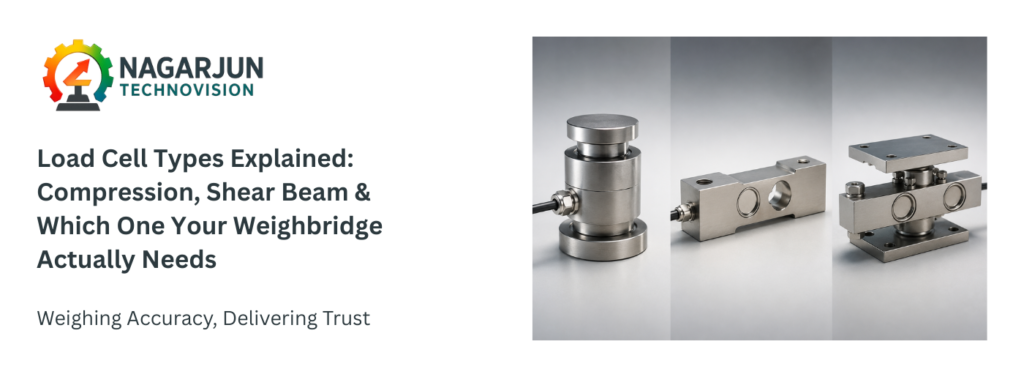
1. Compression Load Cell for Weighbridge
Compression load cells measure force applied directly from above. They are among the most widely used load cells in heavy-duty weighbridge applications.
How It Works
The vehicle’s weight compresses the load cell vertically. Internal strain gauges detect the compression and generate an electrical signal proportional to the applied force.
Advantages
- Extremely high load capacity
- Excellent long-term stability
- Suitable for heavy truck weighbridges
- High overload protection
- Reliable under continuous operation
- Available in stainless steel construction
Disadvantages
- Requires proper mounting
- Installation must be perfectly aligned
- Generally more expensive than beam load cells
Typical Applications
- Truck weighbridges
- Highway weigh stations
- Steel weighbridges
- Concrete weighbridges
- Heavy industrial weighing
2. Shear Beam Load Cell for Weighbridge
Shear beam load cells measure force through shear stress rather than direct compression.
Instead of compressing vertically, the metal beam slightly bends under load, producing a measurable strain.
Advantages
- High accuracy
- Cost-effective
- Easy installation
- Compact design
- Good resistance to side loads
Disadvantages
- Lower maximum capacity than compression load cells
- Not ideal for extremely heavy truck weighing
- More sensitive to improper installation
Typical Applications
- Platform scales
- Floor scales
- Tank weighing
- Hopper weighing
- Medium-capacity weighbridges
3. Double-Ended Shear Beam Load Cell for Weighbridge
Double-ended shear beam load cells are one of the most popular choices for modern truck weighbridges.
The beam is supported at both ends while the load is applied in the center, providing exceptional stability.
Advantages
- Excellent accuracy
- Handles side loads effectively
- Ideal for vehicle weighing
- Long service life
- Easy replacement during maintenance
Common Applications
- Electronic truck weighbridges
- Toll plaza weighbridges
- Mining weighbridges
- Industrial vehicle weighing
4. Rocker Column Compression Load Cell
Rocker column load cells are specially designed for applications where the load position constantly changes.
The rounded design allows slight movement while automatically maintaining accurate measurements.
Benefits
- Self-aligning
- Excellent for uneven loading
- High shock resistance
- Long operational life
Best Applications
- Dynamic weighing
- High-traffic weighbridges
- Vehicle weighing systems
- Heavy industrial environments
Compression vs Shear Beam Load Cell
| Feature | Compression | Shear Beam |
|---|---|---|
| Load Direction | Vertical Compression | Shear Force |
| Maximum Capacity | Very High | Medium |
| Accuracy | Excellent | Excellent |
| Heavy Truck Weighbridge | Excellent | Limited |
| Industrial Platform Scale | Good | Excellent |
| Installation | Moderate | Easy |
| Cost | Higher | Lower |
| Durability | Very High | High |
Which Load Cell Type for Weighbridge Should You Choose?
For most truck weighbridge installations, engineers recommend:
Compression Load Cells
Best for:
- 40–120 Ton weighbridges
- Mining
- Cement plants
- Steel industries
- Logistics hubs
- Ports
Double-Ended Shear Beam Load Cells
Ideal for:
- Pitless weighbridges
- Pit-type weighbridges
- Commercial vehicle weighing
- High-traffic applications
How to Choose the Right Load Cell Types for Weighbridge
For trade-approved weighbridges, select load cells that comply with OIML and Legal Metrology standards.sider Before Selecting a Load Cell
1. Maximum Capacity
Choose a load cell that comfortably handles your weighbridge’s maximum load.
2. Accuracy Requirements
For trade-approved weighbridges, select load cells that comply with OIML and Legal Metrology standards.
3. Environmental Conditions
Consider:
- Dust
- Water
- Humidity
- Temperature changes
- Corrosive chemicals
Stainless steel IP68/IP69K load cells are ideal for harsh environments.
4. Type of Weighbridge
Different weighbridges require different load cell designs:
- Pitless weighbridge
- Pit weighbridge
- Portable weighbridge
- Modular weighbridge
5. Maintenance Requirements
Some load cells are easier to replace without dismantling the entire weighbridge.
Signs Your Weighbridge Load Cells Need Replacement
Watch for these common issues:
- Fluctuating weight readings
- Inconsistent measurements
- Corner weight errors
- Indicator overload messages
- Physical corrosion
- Water ingress
- Broken load cell cable
- Frequent calibration failures
- Unstable zero readings
Early replacement prevents costly downtime and inaccurate billing.
Tips for Increasing Load Cell Life
- Avoid overloading the weighbridge.
- Keep the foundation clean and free from debris.
- Ensure proper drainage around the weighbridge.
- Inspect cables regularly for damage.
- Perform periodic calibration and maintenance.
- Protect junction boxes from moisture.
- Use surge protection and proper earthing.
Conclusion
Selecting the right load cell is critical to achieving accurate, reliable, and long-lasting weighbridge performance. While compression load cells are the preferred choice for heavy-duty truck weighbridges, double-ended shear beam load cells offer excellent stability and are widely used in commercial vehicle weighing systems. Standard shear beam load cells remain a cost-effective solution for medium-capacity industrial applications.
By considering factors such as load capacity, environmental conditions, installation type, and maintenance requirements, you can choose the load cell that best fits your operational needs and minimizes downtime.
If you’re planning a new weighbridge installation or replacing existing load cells, investing in high-quality, certified load cells will ensure accurate measurements and dependable performance for years to come.
Frequently Asked Questions
1. Which load cell is best for a 100-ton truck weighbridge?
Compression and double-ended shear beam load cells are the most suitable options because they offer high load capacity, durability, and excellent accuracy.
2. How long does a weighbridge load cell last?
With proper installation and maintenance, quality load cells typically last 10–20 years, depending on operating conditions and traffic volume.
3. Can one damaged load cell affect the entire weighbridge?
Yes. A single faulty load cell can cause inaccurate weight readings, calibration issues, and unreliable measurements across the entire system.
4. Are stainless steel load cells better?
Yes. Stainless steel load cells provide superior corrosion resistance and are ideal for outdoor, chemical, coastal, and high-moisture environments.