
Introduction
India is rapidly transforming its transportation infrastructure through smart mobility technologies. Among the most significant developments is Multi-Lane Free Flow (MLFF) Tolling, a next-generation electronic toll collection system designed to eliminate traditional toll booths and create seamless highway travel experiences.
For decades, toll plazas have caused traffic congestion, fuel wastage, delays, and driver frustration. Today, with vehicle movement increasing rapidly across national highways, the need for a faster and more efficient tolling system has become unavoidable. Consequently, MLFF tolling is emerging as a revolutionary solution for modern transportation.
In addition, India’s transition toward barrier-free tolling represents more than just a technological upgrade. Instead, it reflects the country’s broader vision of building smarter, greener, and digitally connected infrastructure.
What is MLFF Tolling?
MLFF (Multi-Lane Free Flow) Tolling is an advanced toll collection system where vehicles can pass through designated highway lanes at normal speeds without stopping or slowing down for toll payments.
Instead of physical toll barriers, the system uses digital technologies such as:
- RFID-based FASTag
- ANPR (Automatic Number Plate Recognition) cameras
- High-speed vehicle detection sensors
- AI-powered monitoring systems
- Automated payment processing
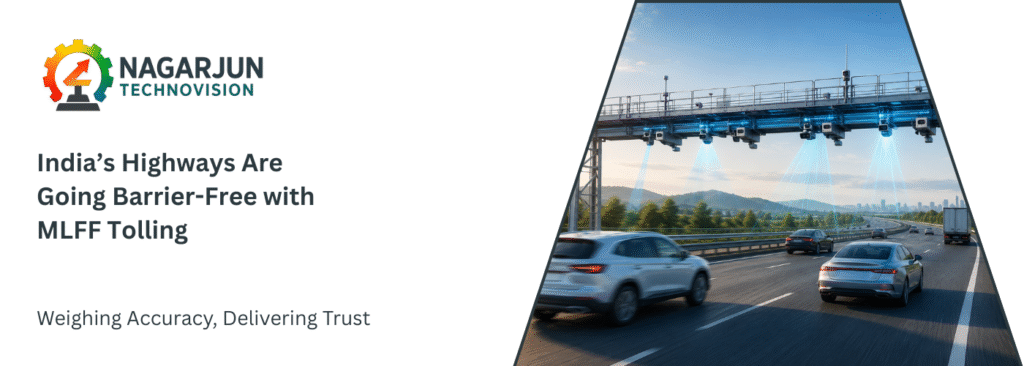
As vehicles pass beneath tolling gantries installed over highways, the system automatically identifies the vehicle and deducts the toll amount electronically.
This creates a completely contactless and uninterrupted travel experience.
According to the National Highways Authority of India (NHAI), MLFF tolling aims to modernize India’s highway infrastructure and improve traffic efficiency
How MLFF Tolling Works
The MLFF system combines multiple technologies to ensure accurate vehicle identification and automated toll collection.
1. FASTag RFID Detection
Vehicles equipped with FASTag stickers contain RFID chips linked to prepaid wallets or bank accounts. As vehicles move beneath toll gantries, RFID readers scan these tags without requiring drivers to stop. Subsequently, the toll amount is deducted automatically from the linked account.
2. ANPR Camera Systems
Automatic Number Plate Recognition (ANPR) cameras capture vehicle registration numbers with high accuracy. In addition to vehicle verification, these cameras support enforcement systems, detect violations, and identify vehicles operating without FASTags.
3. High-Speed Sensors
Advanced sensors installed on highways detect vehicle class, speed, axle count, and lane movement. Therefore, the system can calculate toll charges accurately according to vehicle category and highway usage.
4. Centralized Toll Processing
All collected information is processed in real time through centralized digital systems. After verification, toll payments are deducted electronically, while transaction records are generated instantly for monitoring and auditing purposes.
Why India is Moving Toward MLFF Tolling
India has one of the largest highway networks in the world, and traffic density is increasing rapidly every year. Traditional toll plazas are becoming inefficient for handling large-scale vehicle movement.
MLFF tolling aims to solve several long-standing transportation challenges.
Key Benefits of MLFF Tolling
1. Faster Travel Experience
One of the biggest advantages of MLFF tolling is uninterrupted traffic flow. Drivers no longer need to wait in long queues or stop repeatedly at toll booths. As a result, highway travel becomes significantly faster and smoother.
2. Reduced Traffic Congestion
Traditional toll plazas often become bottlenecks during peak traffic hours, holidays, and weekend travel. However, barrier-free tolling enables continuous multi-lane movement, which drastically reduces congestion on busy highways.
3. Fuel Savings
Vehicles stuck at toll plazas consume unnecessary fuel because of idling and repeated braking. By enabling uninterrupted movement, MLFF systems help reduce fuel consumption, engine stress, and operational costs for vehicle owners.
4. Lower Carbon Emissions
ReReduced vehicle idling directly contributes to lower CO₂ emissions and improved air quality. Therefore, MLFF tolling supports India’s long-term environmental sustainability and green mobility goals.
5. Improved Logistics Efficiency
India’s logistics and freight sector depends heavily on highways for transportation. Unfortunately, delays at toll plazas increase delivery timelines and operating expenses. With MLFF tolling, trucks move faster, transit times decrease, and supply chain efficiency improves considerably.
6. Better User Experience
MLFF creates a modern and hassle-free travel experience for road users. Besides automatic payments and digital transaction records, commuters also benefit from shorter waiting times and seamless highway journeys.
Technologies Behind MLFF Tolling
The success of MLFF tolling depends on a combination of advanced technologies working together.
RFID Technology
RFID-based FASTag systems help identify vehicles wirelessly without physical contact.
Advantages:
- Minimal infrastructure delay
- Fast scanning
- Reliable operation
Artificial Intelligence (AI)
AI systems assist in:
- Traffic monitoring
- Vehicle classification
- Violation detection
- Data analytics
AI improves operational accuracy and enforcement efficiency.
Automatic Number Plate Recognition (ANPR)
ANPR cameras use image processing technology to read vehicle number plates automatically.
This ensures:
- Toll enforcement
- Vehicle verification
- Violation tracking
Cloud & Centralized Data Systems
Centralized digital infrastructure enables:
- Real-time transaction processing
- Remote monitoring
- Data storage
- Highway traffic analytics
Impact on India’s Infrastructure Development
MLFF tolling is an important part of India’s broader infrastructure modernization efforts.
The initiative supports:
- Smart highway development
- Digital India initiatives
- Intelligent transportation systems
- Future-ready mobility infrastructure
It also aligns with the government’s vision of creating world-class highways and improving ease of transportation across the country.
Challenges in MLFF Implementation
Although MLFF offers significant advantages, large-scale implementation comes with certain challenges.
1. FASTag Adoption
For MLFF to function effectively, most vehicles must use FASTag systems.
Challenges include:
- Vehicles without tags
- Inactive FASTags
- Low balance accounts
2. Accurate Enforcement
Enforcement mechanisms must be strong enough to identify and penalize toll violations.
This requires:
- Automated violation processing
- High-quality ANPR systems
- Reliable databases
3. Data Security & Privacy
Since MLFF relies heavily on digital infrastructure, cybersecurity becomes extremely important.
Authorities must ensure:
- Protection against cyber threats
- Secure payment processing
- Safe user data storage
4. Infrastructure Costs
Deploying:
- Tolling gantries
- Sensors
- Camera systems
- Centralized monitoring platforms
requires significant investment during the initial stages.
The Future of Tolling in India
MLFF tolling is expected to redefine highway travel in India over the coming years.
Future possibilities include:
- Fully digital highways
- AI-driven traffic management
- Dynamic toll pricing
- Integrated smart mobility systems
- Connected transportation networks
As adoption increases, India could become one of the leading countries in smart tolling infrastructure.
Conclusion
India’s transition toward Multi-Lane Free Flow (MLFF) Tolling marks a major milestone in the modernization of the country’s transportation infrastructure.
By eliminating toll barriers and enabling uninterrupted vehicle movement, MLFF promises faster travel, reduced congestion, lower fuel consumption, improved logistics efficiency, and better environmental sustainability.
Although implementation challenges still exist, the long-term advantages for commuters, businesses, and the overall economy are substantial. Moreover, barrier-free highways are steadily becoming a reality across India.
Ultimately, the future of Indian highways appears smarter, faster, greener, and completely digital.
FAQs
1. What is MLFF tolling?
MLFF (Multi-Lane Free Flow) tolling is a barrier-free electronic toll collection system that allows vehicles to pass through highways without stopping at toll plazas.
2. How does MLFF tolling work?
It uses RFID FASTag systems, ANPR cameras, and sensors to identify vehicles and deduct toll charges automatically.
3. What are the benefits of MLFF tolling?
Key benefits include:
- Improved highway efficiency
- Reduced traffic congestion
- Faster travel
- Fuel savings
- Lower emissions
4. Is FASTag required for MLFF tolling?
Yes, FASTag plays a major role in electronic toll collection under MLFF systems.
5. Why is India adopting MLFF tolling?
India is adopting MLFF tolling to modernize highways, improve traffic flow, reduce delays, and build smarter transportation infrastructure.
6. How is MLFF different from traditional toll plazas?
Traditional toll plazas require vehicles to stop or slow down for toll payment, while MLFF allows vehicles to move freely without barriers using automated digital toll collection systems.
7. Will MLFF tolling reduce travel time on highways?
Yes, MLFF tolling significantly reduces travel delays by eliminating long queues and stop-and-go traffic at toll plazas, leading to smoother highway movement.
8. Which technologies are used in MLFF tolling?
MLFF tolling uses technologies such as RFID-based FASTag, ANPR cameras, vehicle detection sensors, and centralized digital payment systems for automated toll collection.