
Introduction
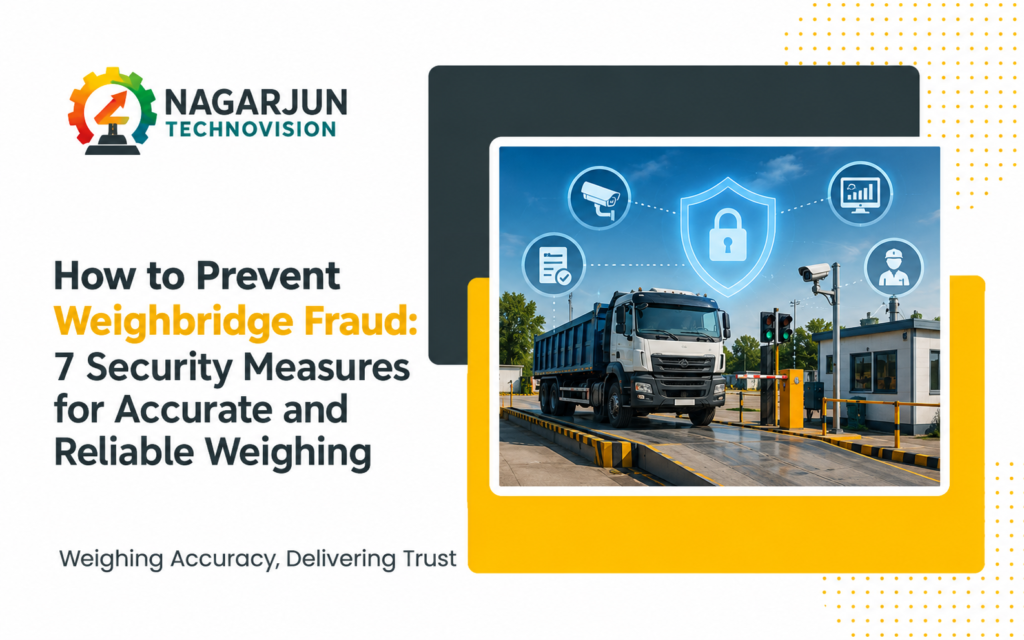
Weighbridge fraud prevention is essential for businesses that depend on accurate vehicle weighing and transparent transactions. Industries such as transportation, mining, cement, construction, logistics, and manufacturing use weighbridges to measure goods and manage shipments. However, unauthorized changes to weight records, incorrect vehicle identification, and manipulated transactions can lead to financial losses and disputes. By implementing effective security measures, businesses can protect weighing data, improve accountability, and maintain trust across their operations.
However, preventing fraud requires more than accurate weighing equipment. Businesses also need controlled system access, vehicle identification, secure transaction records, and regular monitoring. In this guide, we explore seven practical security measures that can help businesses reduce weighing fraud and improve operational transparency.
What Is Weighbridge Fraud and How Can Businesses Prevent It?
Weighbridge fraud involves deliberately manipulating a weighing transaction, vehicle identity, weight record, or related information to gain an unfair advantage. For example, someone might attempt to change a recorded weight, reuse an incorrect vehicle entry, or interfere with transaction records.
Such activities can affect material reconciliation, supplier payments, dispatch records, and customer billing.
It is also important to distinguish fraud from ordinary weighing errors. Incorrect readings can result from calibration issues, mechanical faults, uneven vehicle positioning, or operator mistakes. Therefore, businesses should investigate unusual readings before concluding that fraud has occurred.
7 Weighbridge Fraud Prevention Measures for Industrial Businesses
1. Restrict Unauthorized Access to Weighbridge Software
Uncontrolled access to weighing software can create opportunities for unauthorized changes. If every operator can edit weight records, delete transactions, or change system settings, it becomes difficult to maintain accountability.
To reduce this risk:
- Create individual user accounts for operators, supervisors, and administrators.
- Assign permissions according to each employee’s responsibilities.
- Restrict access to sensitive settings and historical transaction records.
- Use strong passwords and change compromised credentials promptly.
- Disable accounts when employees leave or change roles.
In addition, review user permissions periodically. A secure access-control system helps ensure that only authorized personnel can perform sensitive actions.
2. Improve Weighbridge Fraud Prevention With RFID and ANPR
Vehicle identification is another important part of weighbridge fraud prevention. If the system records the wrong vehicle number or allows repeated entries without verification, businesses may struggle to match weight records with actual deliveries.
RFID technology can identify vehicles using assigned tags, while Automatic Number Plate Recognition (ANPR) cameras can capture and read vehicle registration numbers.
When integrated with suitable weighbridge software, these technologies can help businesses:
- Match vehicles with their assigned transport records.
- Reduce manual vehicle-number entry.
- Flag unexpected or duplicate vehicle entries.
- Connect weight transactions with the correct delivery or dispatch record.
For stronger control, compare vehicle identification data with the relevant purchase order, delivery challan, or dispatch reference. Remember that RFID tags and number-plate recognition can also be misused or misread, so exception alerts and periodic checks remain important.
3. Use CCTV Monitoring to Strengthen Weighbridge Security
CCTV monitoring provides visual evidence that can help investigators understand what happened during a weighing transaction.
Position cameras to capture the vehicle approaching the weighbridge, the vehicle on the platform, the number plate, and relevant activity around the operator’s cabin. Camera placement should support clear identification without obstructing safe vehicle movement.
Where practical, link CCTV footage to transaction timestamps or reference numbers. This makes it easier to locate the relevant footage when a dispute occurs.
Businesses should also restrict access to recordings and establish a suitable retention policy. Keep in mind that CCTV alone cannot prove whether a weight reading is correct. It works best alongside transaction records and system controls.
4. Secure Weighbridge Records With Digital Audit Trails
Manual registers and editable spreadsheets can make it difficult to track changes across large numbers of transactions. Digital records with audit trails provide a clearer history of system activity.
A suitable weighbridge management system should record important details, including:
- Transaction ID and date/time.
- Vehicle registration number.
- Gross weight, tare weight, and net weight.
- Operator or user account associated with the transaction.
- Changes made after the original weighing.
- Reasons for corrections and the person approving them.
Whenever possible, configure the system to preserve the original transaction and record subsequent corrections separately. Restrict deletion rights and back up records securely.
For example, if an operator changes a weight entry after a vehicle leaves the site, the audit trail should help an authorized supervisor identify the change and review its reason.
5. Verify Gross, Tare, and Net Weight to Prevent Weighing Discrepancies
A weighment slip contains key information that helps businesses verify a transaction. Gross weight represents the loaded vehicle’s total weight, tare weight represents the vehicle’s empty weight under the applicable weighing procedure, and net weight represents the material weight calculated from the difference.
The usual calculation is:
Net Weight = Gross Weight − Tare Weight
For example, if a loaded truck weighs 32,500 kg and its recorded tare weight is 12,500 kg, the net material weight is 20,000 kg.
Businesses should check whether the vehicle number, timestamps, material details, and related delivery documents match. They should also investigate unusual differences between repeated measurements or unexpected changes in tare weight.
For consistent results, establish clear procedures for first and second weighings. Where a transaction requires a repeat weighing, document the reason and retain both records. This helps prevent confusion and supports fair investigations.
6. Automate Weighbridge Processes to Reduce Fraud Risks
Manual data entry creates opportunities for both accidental mistakes and deliberate manipulation. Automation can reduce these risks by connecting vehicle identification, weight capture, transaction storage, and report generation.
Depending on the installation, an automated workflow may include RFID identification, ANPR cameras, traffic lights or barriers, weighing indicators, and weighbridge management software.
For example, the system can capture the vehicle identity, record the weight, assign a transaction number, and store the result in a central database. Exception alerts can flag missing vehicle details, repeated entries, or unusual changes for further review.
However, automation does not eliminate every risk. Businesses should secure software accounts, review integration settings, maintain backups, and test the system regularly. Any automatic correction or override should require appropriate authorization.
7. Audit Weighbridge Transactions and Investigate Suspicious Activity
Even a well-designed security system needs regular review. Audits help businesses identify unusual patterns that may otherwise remain unnoticed.
Review transactions for warning signs such as:
- Repeated changes to completed weight records.
- Unusual differences in tare weights for the same vehicle.
- Missing vehicle identification or supporting documents.
- Duplicate transaction numbers or unexpected gaps in records.
- Frequent manual overrides by the same account.
- Weight differences that cannot be explained by normal operating conditions.
When a discrepancy appears, preserve the relevant records, check available CCTV footage, review the audit trail, and speak with authorized personnel. Compare the transaction with dispatch documents and inventory records before reaching a conclusion.
Most importantly, document the findings and corrective actions. A consistent investigation process helps businesses distinguish technical faults, human errors, and potential misconduct.
Why Weighbridge Fraud Prevention Matters for Industrial Businesses
Strong weighing controls support more than fraud prevention. They also improve material reconciliation, inventory management, billing accuracy, and accountability across supply chains.
For example, mining and cement businesses may handle thousands of tonnes of material, while logistics companies need reliable records for deliveries and transport operations. In these environments, an unexplained weight discrepancy can affect several connected business processes.
Combining access controls, vehicle identification, digital records, and regular audits helps create a more transparent weighing process. Businesses should also maintain their equipment and follow applicable verification requirements to support reliable measurements.
In India, the Department of Consumer Affairs provides information on the Legal Metrology framework, including requirements related to weighing and measuring instruments. Businesses should check the rules applicable to their equipment, location, and intended use.
For additional technical context, the International Organization of Legal Metrology (OIML) publishes international recommendations and resources relating to measurement instruments. These references provide useful background, but businesses should follow the applicable Indian requirements for their specific installation.
How Weighbridge Software Supports Fraud Prevention and Security
Modern weighbridge software can bring vehicle details, weight readings, operator activity, and transaction history into one system. When configured correctly, it helps authorized personnel identify discrepancies and trace changes more efficiently.
Businesses exploring connected weighing solutions can also learn more about IoT and cloud-connected weighbridges and how remote monitoring can support operational visibility.
Similarly, regular maintenance and appropriate calibration are essential for reliable measurements. Read our weighbridge maintenance and calibration checklist for additional guidance.
Security controls and technical maintenance serve different purposes. Software permissions help protect transaction records, while equipment inspection and verification help identify measurement problems. Both are important for a dependable weighing operation.
An effective weighbridge fraud prevention strategy combines secure software access, reliable vehicle identification, protected digital records, and regular security audits.
Frequently Asked Questions About Weighbridge Fraud Prevention
1. What Is the Most Effective Way to Prevent Weighbridge Fraud?
There is no single measure that prevents every type of fraud. A combination of restricted software access, vehicle identification, CCTV monitoring, secure audit trails, automated workflows, and regular audits provides stronger overall protection.
2. Can Weighbridge Software Prevent Unauthorized Weight Changes?
Software with role-based permissions and audit trails can reduce the risk of unauthorized changes and help identify when a record has been modified. Its effectiveness depends on proper configuration, secure administration, and regular reviews.
3. How Do RFID and ANPR Help Secure Weighbridge Transactions?
RFID identifies a vehicle through an assigned tag, while ANPR reads its registration number using a camera. When integrated with weighing software, these technologies help match vehicle identity with transaction records and flag certain inconsistencies.
4. Does Every Incorrect Weighbridge Reading Indicate Fraud?
No. Calibration problems, damaged components, unsuitable vehicle positioning, and operator mistakes can also cause discrepancies. Businesses should investigate the evidence before deciding whether a discrepancy involves deliberate manipulation.
5. How Often Should Weighbridge Records Be Audited?
The frequency depends on transaction volume, operational risk, and internal procedures. Businesses can review exceptions daily, conduct periodic transaction audits, and investigate significant discrepancies immediately.
Conclusion: Build a Strong Weighbridge Fraud Prevention Strategy
Effective weighbridge fraud prevention depends on combining technology, secure procedures, and human oversight. Restricting access, verifying vehicle identity, monitoring critical areas, maintaining reliable digital records, checking weight calculations, automating suitable tasks, and auditing suspicious transactions can help businesses improve transparency.
At the same time, businesses should investigate discrepancies carefully rather than assuming every incorrect reading is fraudulent. By bringing together reliable equipment, appropriate software controls, and consistent operating procedures, industrial businesses can protect transaction integrity and build greater confidence in their weighing operations.