
Introduction
As transportation networks become increasingly complex, accurate vehicle weight measurement has become more important than ever. Weigh-In-Motion (WIM) systems enable authorities, toll operators, and logistics companies to measure vehicle weights without requiring vehicles to stop. As a result, traffic flow improves while operational efficiency increases.
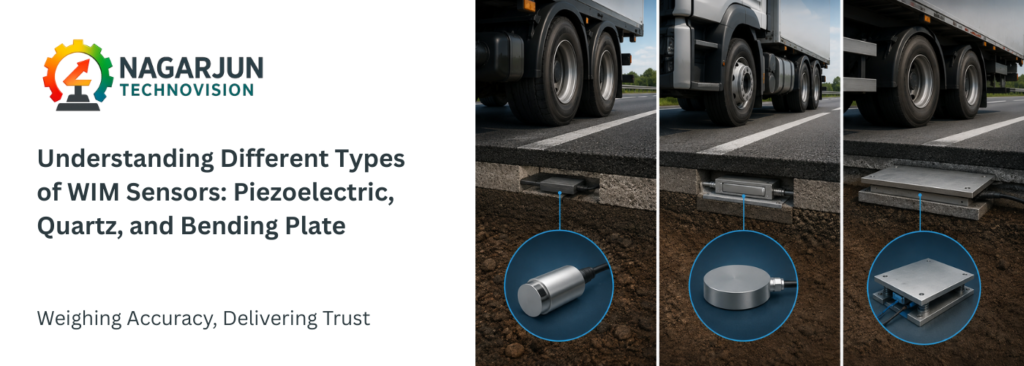
Among the most critical components of these systems are the sensors responsible for collecting weight data. Therefore, understanding the different types of WIM sensors is essential when planning a WIM installation. The three most commonly used technologies are Piezoelectric Sensors, Quartz Sensors, and Bending Plate Sensors. Each option offers unique benefits in terms of accuracy, durability, installation requirements, and cost.
In this article, we will explore how these sensor technologies work and compare their advantages, limitations, and applications.
What Are WIM Sensors?
WIM sensors are specialized devices installed within or beneath road surfaces to measure axle loads, gross vehicle weight, vehicle speed, and classification while vehicles remain in motion. Consequently, transportation agencies can collect valuable data without interrupting traffic.
Although all WIM systems serve the same purpose, the sensor technology used significantly impacts performance and accuracy. The most widely used types of WIM sensors include:
- Piezoelectric Sensors
- Quartz Sensors
- Bending Plate Sensors
Let’s examine each technology in greater detail.
1. Piezoelectric WIM Sensors
How Piezoelectric Sensors Work
Piezoelectric sensors use materials that generate an electrical charge when mechanical pressure is applied. When a vehicle passes over the sensor, the force exerted by the tires produces a voltage signal proportional to the load. The system then converts this signal into weight data.
Advantages of Piezoelectric Sensors
Piezoelectric technology remains popular because of its affordability and ease of deployment. Furthermore, installation can often be completed quickly with minimal disruption to traffic.
Key benefits include:
- Low maintenance requirements
- Cost-effective solution
- Simple installation process
- Suitable for temporary and permanent sites
- Effective for traffic monitoring
Limitations
However, piezoelectric sensors generally provide lower accuracy than quartz or bending plate systems. In addition, their performance can be influenced by temperature fluctuations and long-term wear.
Common Applications
- Traffic data collection
- Vehicle classification
- Speed monitoring
- Preliminary weight screening
- Overload detection programs
Best For
Organizations seeking a budget-friendly WIM solution often choose piezoelectric technology, especially when moderate accuracy is sufficient.
2. Quartz WIM Sensors
How Quartz Sensors Work
Quartz sensors utilize specially engineered quartz crystals that generate highly stable electrical signals when subjected to vehicle loads. Unlike some other technologies, quartz sensors maintain consistent performance across a wide range of environmental conditions.
As a result, they are widely regarded as one of the most reliable types of WIM sensors available today.
Advantages of Quartz Sensors
Quartz technology offers an excellent balance between accuracy and durability. Moreover, it performs exceptionally well under heavy traffic conditions.
Key benefits include:
- High weighing accuracy
- Long-term stability
- Excellent temperature resistance
- High durability
- Suitable for enforcement applications
Limitations
Despite their advantages, quartz sensors typically require a higher initial investment. Furthermore, installation demands greater precision to achieve optimal results.
Common Applications
- Highway weigh-in-motion stations
- Toll roads
- Freight management systems
- Weight enforcement programs
- Intelligent transportation systems (ITS)
Best For
Projects that require dependable and highly accurate weight data often benefit from quartz sensor technology.
3. Bending Plate WIM Sensors
How Bending Plate Sensors Work
Bending plate sensors consist of steel plates installed within the roadway structure. As vehicle axles move across the plate, slight deformation occurs. Strain gauges then measure this deflection and convert it into accurate weight information.
Because of this design, bending plate systems deliver exceptional precision and repeatability.
Advantages of Bending Plate Sensors
Among all types of WIM sensors, bending plate technology is often recognized for providing the highest accuracy levels.
Its primary benefits include:
- Very high weighing accuracy
- Excellent repeatability
- Long operational lifespan
- Suitable for legal-for-trade applications
- Effective at highway speeds
Limitations
On the other hand, installation costs are generally higher. Additionally, these systems require more extensive civil work compared to piezoelectric and quartz sensors.
Common Applications
- Weight enforcement stations
- Permanent highway monitoring systems
- Research and transportation studies
- Legal-for-trade vehicle weighing
Best For
Organizations that require maximum accuracy and long-term performance often select bending plate technology.
Comparison of Different Types of WIM Sensors
| Feature | Piezoelectric | Quartz | Bending Plate |
|---|---|---|---|
| Accuracy | Moderate | High | Very High |
| Installation Cost | Low | Medium to High | High |
| Durability | Moderate | High | Very High |
| Temperature Stability | Moderate | Excellent | Excellent |
| Maintenance | Low | Low | Moderate |
| Traffic Monitoring | Excellent | Excellent | Good |
| Enforcement Applications | Limited | Suitable | Highly Suitable |
| Installation Complexity | Easy | Moderate | Complex |
Factors to Consider When Choosing a WIM Sensor
Selecting the right WIM sensor depends on several factors:
1. Required Accuracy
For basic traffic analysis, piezoelectric sensors may be sufficient. For enforcement or commercial applications, quartz or bending plate sensors are recommended.
2. Traffic Volume
High-volume highways benefit from durable technologies such as quartz and bending plate systems.
3. Budget Constraints
Piezoelectric sensors offer a lower-cost entry point, while quartz and bending plate systems require higher upfront investments.
4. Environmental Conditions
Extreme weather conditions can impact sensor performance. Quartz sensors generally provide the best stability across varying temperatures.
5. Intended Application
Different applications require different accuracy levels:
- Traffic counting → Piezoelectric
- Weight screening → Piezoelectric or Quartz
- Tolling systems → Quartz
- Enforcement systems → Quartz or Bending Plate
- Legal-for-trade weighing → Bending Plate
The Growing Importance of Advanced WIM Technology
As governments and transportation authorities increasingly focus on road safety, infrastructure protection, and efficient freight management, demand for accurate WIM systems continues to grow.
Modern WIM installations are being integrated with:
- Automatic Number Plate Recognition (ANPR)
- Traffic management systems
- Toll collection systems
- Smart city infrastructure
- Vehicle enforcement solutions
The choice of sensor technology plays a crucial role in ensuring reliable and actionable data for these applications.
Why Sensor Selection Matters
Choosing among the different types of WIM sensors directly affects:
- Measurement accuracy
- Operational costs
- System lifespan
- Data reliability
- Regulatory compliance
A well-selected sensor technology can significantly improve the effectiveness of a WIM installation while reducing maintenance and operational challenges over time.
Conclusion
Understanding the different types of WIM sensors is essential when planning a successful Weigh-In-Motion project. While Piezoelectric Sensors offer affordability and ease of installation, Quartz Sensors provide a strong balance of accuracy and durability. For applications requiring the highest precision and enforcement-grade performance, Bending Plate Sensors remain one of the most reliable options available.
By carefully evaluating project requirements, traffic conditions, accuracy expectations, and budget considerations, organizations can select the most suitable WIM sensor technology to ensure long-term performance and dependable vehicle weight measurement.
Frequently Asked Questions (FAQs)
1. What are the main types of WIM sensors?
The main types of WIM sensors are Piezoelectric Sensors, Quartz Sensors, and Bending Plate Sensors.
2. Which WIM sensor provides the highest accuracy?
Bending Plate Sensors generally offer the highest accuracy, followed closely by Quartz Sensors.
3. Are piezoelectric sensors suitable for enforcement applications?
Piezoelectric sensors are primarily used for traffic monitoring and weight screening rather than direct enforcement.
4. Why are quartz sensors popular in highway WIM systems?
Quartz sensors provide high accuracy, durability, and excellent temperature stability, making them ideal for highway applications.
5. What is the most cost-effective WIM sensor technology?
Piezoelectric sensors are generally the most economical option for many WIM installations.
6. How long do WIM sensors typically last?
The lifespan varies by technology, traffic volume, and maintenance practices, but quartz and bending plate sensors typically offer longer service life than standard piezoelectric sensors.
7. Which WIM sensor is best for toll roads?
Quartz sensors are commonly used for toll road applications due to their balance of accuracy, durability, and reliability.