
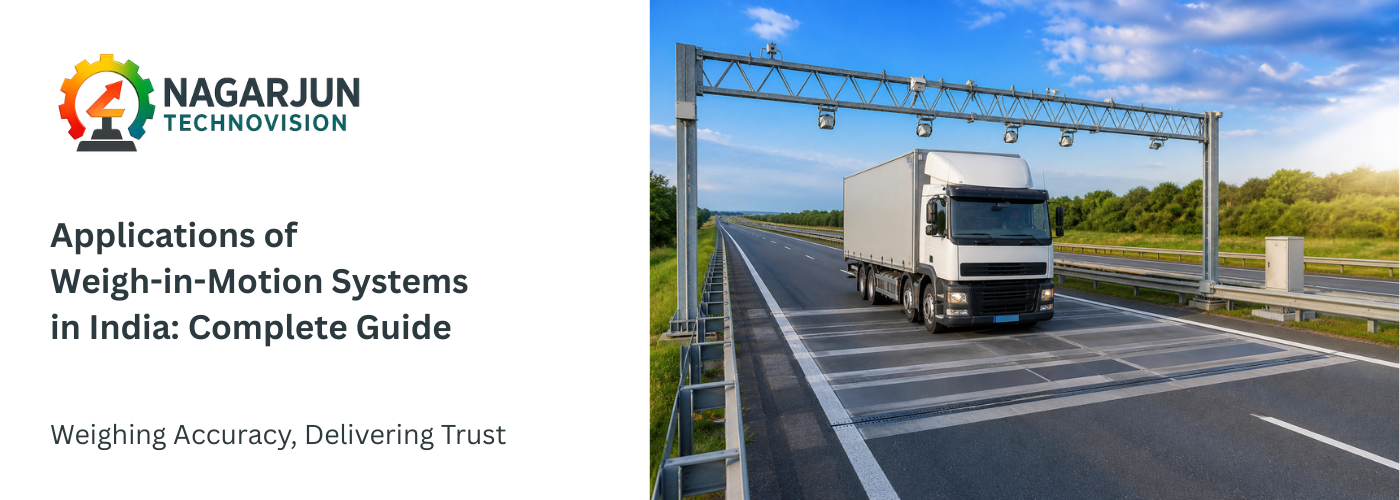
Applications of Weigh-in-Motion Systems in India
Weigh-in-motion (WIM) systems are transforming how vehicles are monitored and managed across India. These advanced systems measure vehicle weight without stopping the vehicle, making them ideal for high-traffic environments.
Today, weigh in motion applications are widely used in highways, logistics, mining, and industrial sectors. As India moves toward smarter infrastructure, the demand for WIM technology is growing rapidly.
In this guide, we will explore the top weigh in motion applications in India, their benefits, and why businesses are adopting them.
What is a Weigh-in-Motion System?
A weigh-in-motion system is an automated solution that captures vehicle weight while the vehicle is in motion. Unlike traditional weighbridges, it eliminates the need to stop vehicles, reducing congestion and saving time.
These systems use sensors embedded in the road surface to measure axle load, gross weight, and vehicle speed.
Why Are Weigh in Motion Applications Growing in India?
India’s infrastructure is expanding at a fast pace. With increasing freight movement and strict government regulations, accurate weight monitoring has become essential.
Key reasons for growth include :
- Rising highway traffic
- Need for overload control
- Smart city initiatives
- Automation in logistics
- Improved road safety
Top Weigh in Motion Applications in India
1. Highway Toll and Traffic Management
One of the most important weigh in motion applications is in highways.
WIM systems help authorities:
- Detect overloaded vehicles
- Reduce traffic congestion
- Improve toll operations
- Ensure road safety
By integrating WIM with toll plazas, vehicles can be monitored without stopping, ensuring smooth traffic flow.
2. Overload Detection and Law Enforcement
Overloaded trucks cause severe damage to roads and increase accident risks. WIM systems help enforce regulations by identifying overloaded vehicles in real time.
Benefits include:
- Reduced road damage
- Better compliance with regulations
- Automated penalty systems
This application is crucial for maintaining national highway quality.
3. Logistics and Supply Chain Optimization
In the logistics sector, speed and accuracy are critical. Weigh in motion applications help companies monitor vehicle loads without delays.
Key advantages:
- Faster vehicle movement
- Reduced waiting time
- Improved fleet efficiency
- Real-time data tracking
This leads to better supply chain management and cost savings.
4. Mining and Bulk Material Transport
Mining operations require accurate weight measurement of heavy vehicles. Traditional methods slow down operations, but WIM systems solve this problem.
Applications in mining include:
- Monitoring loaded trucks
- Preventing overloading
- Increasing operational efficiency
This helps companies maintain productivity while ensuring compliance.
5. Industrial and Manufacturing Facilities
Factories and industrial plants use WIM systems for internal vehicle monitoring.
Common uses:
- Tracking incoming raw materials
- Managing outbound shipments
- Reducing manual intervention
This ensures smooth operations and accurate inventory control.
6. Smart Cities and Urban Infrastructure
As India develops smart cities, weigh in motion applications are becoming essential.
WIM systems support:
- Intelligent traffic management
- Data-driven urban planning
- Pollution control (by monitoring heavy vehicles)
These systems play a key role in building modern, efficient cities.
7. Ports and Freight Corridors
Ports handle a large volume of cargo daily. WIM systems help manage this efficiently.
Applications include:
- Monitoring container trucks
- Reducing congestion at entry points
- Ensuring compliance with weight limits
This improves overall port productivity.
Key Benefits of Weigh in Motion Systems
Here are the major benefits that make WIM systems popular in India:
1. No Vehicle Stopping
Vehicles do not need to stop, saving time and fuel.
2. High Efficiency
Faster processing of vehicles improves operations.
3. Accurate Data Collection
Provides real-time and precise weight data.
4. Reduced Road Damage
Helps control overloading and extend road life.
5. Automation
Minimizes human intervention and errors.
Challenges of Weigh in Motion Applications
While WIM systems offer many benefits, there are some challenges:
- High initial installation cost
- Maintenance requirements
- Accuracy affected by road conditions
- Need for calibration
However, with proper setup, these challenges can be minimized.
Future of Weigh in Motion Applications in India
The future of weigh in motion applications in India looks promising. With increasing digitalization and government initiatives, WIM systems will become more advanced and widespread.
Expected trends:
- Integration with AI and analytics
- Cloud-based monitoring systems
- Expansion in smart highways
- Wider adoption in logistics
Businesses that adopt WIM early will gain a competitive advantage.
Conclusion
Weigh in motion applications are revolutionizing vehicle monitoring across India. From highways to logistics and smart cities, these systems offer speed, accuracy, and efficiency.
As infrastructure continues to grow, WIM technology will play a critical role in ensuring safe, compliant, and optimized transportation systems.
If your business deals with heavy vehicle movement, investing in a weigh-in-motion system can significantly improve operations.
FAQ’s
1. What are weigh in motion applications?
Weigh in motion applications refer to the use of WIM systems in industries like highways, logistics, mining, and smart cities to measure vehicle weight without stopping.
2. Where are WIM systems used in India?
They are used in highways, toll plazas, ports, mining sites, and industrial facilities.
3. How do WIM systems help in road safety?
They detect overloaded vehicles, reducing accidents and road damage.
4. Are weigh in motion systems accurate?
Yes, modern WIM systems provide high accuracy when properly installed and calibrated.
5. What industries benefit from WIM applications?
Logistics, mining, transportation, manufacturing, and government sectors benefit the most.
6. Is WIM better than a weighbridge?
WIM is faster and more efficient, but weighbridges are still used for static and precise measurements.
7. What is the future of weigh in motion in India?
The future includes AI integration, smart highways, and wider adoption across industries.