
Introduction
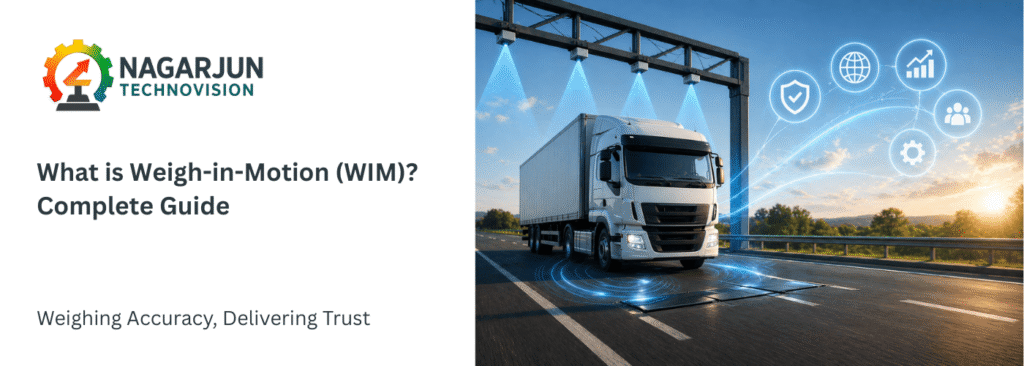
A weigh in motion system is transforming how vehicles are weighed on roads and highways. Unlike traditional weighbridges that require vehicles to stop, WIM technology measures vehicle weight while they are moving.
This innovation is widely used in highways, toll plazas, mining, logistics, and smart traffic systems to improve efficiency, reduce congestion, and ensure compliance with weight regulations.
In this complete guide, you’ll learn everything about weigh-in-motion systems, including how they work, types, benefits, applications, and why they are becoming essential in modern transportation.
What is a Weigh-in-Motion (WIM) System?
A weigh in motion system is an advanced vehicle weighing technology that captures the gross vehicle weight, axle load, speed, and classification of vehicles as they pass over sensors embedded in the road.
Unlike static weighing systems, vehicles do not need to stop. This makes WIM ideal for high-traffic environments where stopping vehicles would cause delays.
How Does a Weigh-in-Motion System Work?
A weigh in motion system uses a combination of hardware and software:
1. Sensors Installed in the Road
Sensors such as:
- Piezoelectric sensors
- Load cells
- Bending plates
These sensors detect the force applied by moving vehicles.
2. Data Acquisition System
As a vehicle passes, the system records:
- Vehicle weight
- Axle load
- Speed
- Number of axles
3. Software Processing
Advanced software processes the data in real time and generates:
- Reports
- Alerts for overloaded vehicles
- Traffic insights
4. Output & Integration
The system can integrate with:
- Enforcement systems
- Toll systems
- Traffic management systems
Types of Weigh-in-Motion Systems
1. Low-Speed WIM (LSWIM)
- Vehicle speed: 5–15 km/h
- High accuracy
- Used in industrial areas, warehouses, and checkpoints
2. Medium-Speed WIM (MSWIM)
- Vehicle speed: 15–60 km/h
- Balanced accuracy and speed
- Suitable for urban roads and toll plazas
3. High-Speed WIM (HSWIM)
- Vehicle speed: Up to highway speeds
- Real-time traffic monitoring
- Used on highways and expressways
Key Features of a Weigh-in-Motion System
- Real-time vehicle data collection
- No need to stop vehicles
- Automatic vehicle classification
- Overload detection
- Integration with smart traffic systems
- Durable and low maintenance
Benefits of Using a Weigh-in-Motion System
1. Improved Traffic Flow
Vehicles don’t stop, reducing congestion and delays.
2. Increased Efficiency
Faster data collection improves operational productivity.
3. Enhanced Road Safety
Overloaded vehicles can be detected instantly, reducing accidents.
4. Infrastructure Protection
Helps prevent road damage caused by overloaded trucks.
5. Data-Driven Decisions
Provides valuable data for traffic planning and logistics optimization.
Applications of Weigh-in-Motion Systems
Weigh in motion systems are widely used in:
🚛 Highways & Expressways
- Traffic monitoring
- Overload enforcement
🏭 Mining & Industrial Sites
- Monitoring heavy vehicle loads
🚚 Logistics & Freight
- Fleet management
- Load optimization
🛣️ Toll Plazas
- Automated vehicle classification
- Faster toll processing
🏙️ Smart Cities
- Traffic analytics
- Infrastructure planning
WIM vs Traditional Weighbridge
| Feature | Weigh-in-Motion System | Weighbridge |
|---|---|---|
| Vehicle Movement | Moving | Stopped |
| Speed | High | Slow |
| Accuracy | Moderate to High | Very High |
| Traffic Impact | Minimal | Causes delays |
| Use Case | Highways, traffic systems | Industrial & commercial |
Is a Weigh-in-Motion System Accurate?
Yes, modern weigh in motion systems offer high accuracy, especially low-speed systems. However, accuracy depends on:
- Type of sensors
- Installation quality
- Vehicle speed
- Calibration
For enforcement purposes, WIM is often combined with static weighbridges for verification.
Future of Weigh-in-Motion Technology
The future of weigh in motion systems is closely linked with:
- Smart highways
- AI-based traffic monitoring
- IoT integration
- Automated enforcement systems
As governments focus on road safety and digital infrastructure, WIM systems will play a key role in transportation management.
Conclusion
A weigh in motion system is a powerful solution for modern vehicle weighing and traffic management. It eliminates the need for stopping vehicles, improves efficiency, and provides real-time insights for better decision-making.
Whether for highways, logistics, or smart city projects, WIM technology is becoming an essential investment for organizations looking to enhance operations and ensure compliance.
FAQs
1. What is a weigh in motion system?
A weigh in motion system measures vehicle weight while the vehicle is moving over sensors installed in the road.
2. How accurate is WIM?
Accuracy varies by type, but low-speed WIM systems can be highly accurate, while high-speed systems provide slightly lower accuracy but faster data.
3. Where is WIM used?
It is used in highways, toll plazas, logistics, mining, and smart city applications.
4. Does WIM replace weighbridges?
No, WIM complements weighbridges. It is used for screening and monitoring, while weighbridges are used for precise measurement.
5. What are the main types of WIM systems?
Low-speed, medium-speed, and high-speed weigh-in-motion systems.
6. Can WIM detect overloaded vehicles?
Yes, it can identify overloaded vehicles in real time.
7. What sensors are used in WIM?
Common sensors include piezoelectric sensors, load cells, and bending plates.