
Medium-Speed
Weigh-in-Motion (MSWIM)
Measures vehicle weight while vehicles move at controlled speeds.
They offer high efficiency, accuracy, and reliability for
modern traffic environments.
What is a Medium-Speed Weigh-in-Motion System?
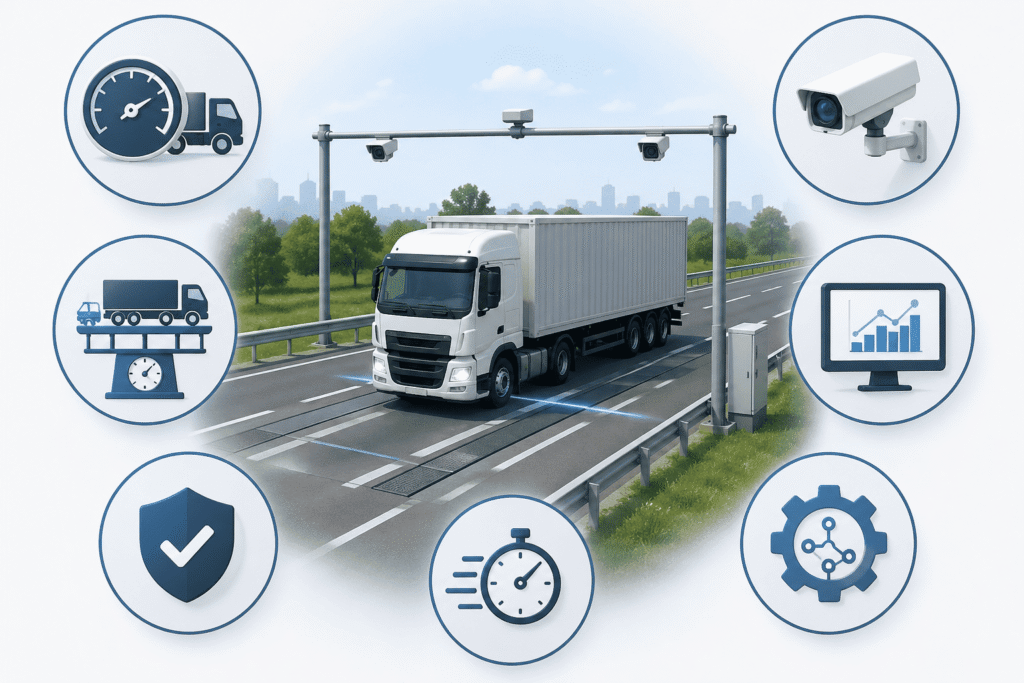
An intelligent weighing solution that measures vehicle weight without stopping the vehicle. Unlike traditional weighbridges, trucks do not need to halt completely. Instead, they move smoothly over embedded sensors.
As a result, this system removes the common “stop-and-go” problem. Hence improves traffic flow and increases operational efficiency.
Therefore such systems are widely used on highways, toll plazas, and industrial sites, because provide real-time data, which is essential for monitoring and enforcement.
Typically, automated vehicle weighing systems operate between 10 km/h and 60 km/h. As a result, they offer a strong balance between speed and accuracy. In addition, they meet the standards recommended by the National Highways Authority of India.
How Does MSWIM Work?
MSWIM systems use high-precision sensors installed beneath the road surface which detect weight as vehicles pass over them.
Because vehicles do not stop, the process remains smooth and continuous.
Step-by-Step Process:
- Initial Detection:
As soon as the tires pass over the sensors, the system captures axle loads in real time. - Data Transmission:
Next, the sensors send signals to a controller and the controller calculates the total vehicle weight. - Data Recording:
At the same time, the system records speed, axle count, and vehicle type. - Final Processing:
Finally, the software processes the data and displays instant results. As a result, delays are reduced and traffic congestion is minimized.
Components of a Medium-Speed Weigh-in-Motion System
A Medium-Speed Weigh-in-Motion (MSWIM) system consists of several advanced components that work together to provide accurate vehicle weight measurement and traffic monitoring.
Medium-Speed Weigh-in-Motion Load Cell
The load cell is one of the most critical components of the system. It captures axle loads and vehicle weight data with high precision. As a trusted Medium-Speed Weigh-in-Motion Load Cell supplier and exporter, we provide reliable weighing solutions for highways, toll plazas, logistics hubs, and industrial facilities.
Medium-Speed Weigh-in-Motion Indicator
The weight indicator processes signals received from sensors and load cells and converts them into accurate weight data. Our Medium-Speed Weigh-in-Motion Indicators are designed for real-time monitoring, reporting, and seamless software integration.
Medium-Speed Weigh-in-Motion Junction Box
The junction box acts as the communication interface between load cells and the indicator. Our durable Medium-Speed Weigh-in-Motion Junction Boxes ensure stable signal transmission and long-term performance in outdoor environments.
Medium-Speed Weigh-in-Motion Vehicle Separator Sensor
Vehicle separator sensors accurately detect vehicle entry and exit points. These sensors help improve axle counting accuracy, vehicle classification, and traffic analysis. We offer reliable Medium-Speed Weigh-in-Motion Vehicle Separator Sensors for demanding applications.
Bending Plate Weigh-in-Motion Technology
Modern MSWIM systems can utilize advanced Bending Plate Weigh-in-Motion technology to achieve highly accurate dynamic vehicle weighing. Bending plate sensors measure wheel and axle loads as vehicles travel at medium speeds, making them suitable for toll plazas, highway monitoring, overload enforcement, and intelligent transportation systems.
As an experienced Bending Plate Weigh-in-Motion manufacturer and exporter, Nagarjun Technovision delivers robust and reliable solutions designed for long-term performance and accuracy.
Key Features of MSWIM System
MSWIM systems offer several important features for modern logistics:
Features
Dynamic Accuracy: Delivers reliable measurements even at varying moderate speeds.
Instant Reporting: Real-time data processing allows for immediate monitoring.
Robust Build: The durable, weather-resistant design is built to withstand harsh environmental conditions.
Seamless Integration: It easily connects with existing traffic management systems to improve overall oversight.
Benefits of MSWIM System
Improved Traffic Flow
Vehicles continue moving without stopping. Therefore, congestion is significantly reduced.
Cost Savings
The system requires less manpower and maintenance. As a result, operational costs decrease over time.
Better Road Safety
MSWIM detects overloaded vehicles early. This helps prevent road damage and accidents.
Smart Traffic Management
Additionally, it supports modern traffic systems and improves overall efficiency.

This helps improve road safety and aligns with modern traffic systems used globally in Traffic management systems.
Technical Specifications
| Parameter | Details |
|---|---|
| Speed Range | 10 – 60 km/h |
| Accuracy | ±2% to ±5% |
| Capacity | Up to 120 Tons or more |
| Sensor Type | Load cells / Piezo sensors |
| Installation Type | In-road embedded |
| Data Output | Digital / Software-based |
Applications of Medium-Speed Weigh-in-Motion
The Medium-Speed Weigh-in-Motion (MSWIM) system is widely used in:
● Highway toll plazas
● Logistics and transport hubs
● Mining and construction sites
● Industrial facilities
● Ports and cargo terminals

Why Choose Nagarjun Technovision for Medium-Speed Weigh-in-Motion Systems?
Leading Medium-Speed Weigh-in-Motion System supplier and exporter in India
Advanced load cells, indicators, and junction boxes
Custom software integration and reporting
High-accuracy vehicle weighing technology
Compliance with industry and highway standards
Reliable after-sales service and technical assistance
Frequently Asked Questions
Q1. What is the speed range of MSWIM systems?
This dynamic weighing system typically operate between 10 km/h and 60 km/h.
Q2. How accurate is a Medium-Speed Weigh-in-Motion system?
MSWIM systems typically provide accuracy levels ranging from ±2% to ±5%, depending on installation quality, calibration, road conditions, and vehicle speed.
Q3. Where is MSWIM commonly used?
MSWIM systems are commonly installed at highway toll plazas, logistics hubs, mining sites, ports, industrial facilities, and transportation corridors.
Q4. Does MSWIM require vehicles to stop?
No. Vehicles can pass over the weighing sensors at medium speeds while accurate weight measurements are captured automatically.
Q5. What maintenance is required?
Periodic calibration, sensor inspection, software updates, and routine system checks help ensure optimal performance and long-term reliability.
Q6. Can MSWIM detect overloaded vehicles?
Yes. The system automatically identifies overloaded vehicles and generates alerts for enforcement and compliance purposes.
Q7. Is MSWIM suitable for all weather conditions?
Yes. Modern MSWIM systems are designed to operate reliably in rain, dust, heat, and other challenging environmental conditions.